

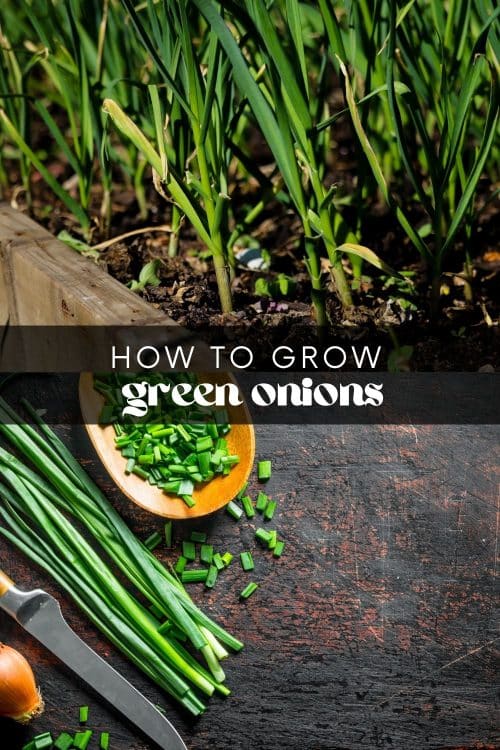
Green onions are one of the easiest vegetables to grow. They can be grown indoors in small pots or outdoors in a garden bed. You can even regrow them from scraps! If you want to add some freshness to your meals without going to the grocery store, growing onions at home is a great option.
WANT TO SAVE THIS RECIPE?
Enter your email below and we'll send it straight to your inbox. Plus you’ll get great new recipes from us every week!
Green onions (Allium fistulosum) are a perennial member of the allium onion family, which includes garlic, chives, and shallots. They're known for their long, slender green leaves, small white bulbs, and mild onion flavor. These versatile young onions are quick-growing and can be used in many dishes!
If you're wondering how to grow green onions, don't worry. Let's dive into the basics of green onion gardening.
Choosing The Right Green Onion Variety
You might have heard green onions being referred to as scallions or spring onions. These terms are often used interchangeably but aren't exactly the same. Here are the differences between the three:
- Scallions: These are younger than green onions and are harvested earlier. They have a milder flavor and a thinner green part.
- Green onions: This is the one we want to grow! The bulb will be wider than a scallion and will be oval in shape.
- Spring onions: These are more mature than green onions and have a slightly stronger flavor. They also have a rounder bulb.
Green onions come in a few different varieties. Some will take slightly longer to grow than others, but all are easy enough and perfect for beginners. Here are some popular green onion varieties:
- White Lisbon
- Red Beard
- Tokyo Long
Whichever cultivar you choose, please note green onions are toxic to dogs and cats. The same goes for other members of the allium family. It's best to keep pets away from your green onion plants or grow them in containers to prevent accidental ingestion.
When Is the Best Time to Plant Green Onions?
Green onions are a cool-season crop, but you'll want to wait for the last frost to pass before planting. For most locations, this will be in early spring. If you're growing other veggies like lettuce, plant them at the same time. You can also get a head start and sow seeds indoors and transplant them once the weather warms up. They’ll then be ready for an early summer harvest.
How Long Do Green Onions Take to Grow?
Green onions are relatively quick to grow. Most varieties take 60-80 days to grow from seed! If you plant multiple crops every few weeks, you'll have a longer harvest period. This means you can have a continual harvest and steady supply of green onions throughout the season.
What Are the Best Growing Conditions for Green Onions?
These green veggies might be easy enough to grow, but here are some tips to ensure they thrive:
Location
You can grow green onions in the ground or in containers. They also grow well indoors! Wherever you plant your green onions, be sure to choose a sunny spot. This would be a sunny windowsill for indoor plants or an area with full sun outside. As for the container, opt for one with good drainage holes and a size of at least 6-8 inches.
Soil
Green onions prefer well-draining, moist soil with a pH of 6.0-7.0. They can also deal with slightly acidic soil, so you can plant your green onions with tomatoes and other crops. The soil type can be sandy and loamy if it drains well. Mix in some organic matter before planting for added nutrients.
Sunlight
We know green onions love the sun, but they can tolerate partial shade. The best way to ensure they receive enough light is to plant them somewhere with at least 6 hours of sunlight daily.
Temperature and Humidity
When planting green onions, the ground should be around 50°F (10°C). This is why we should wait for the last frost date to pass. However, they thrive in temperatures between 60-80°F (15-27°C). They don't mind humidity, but they do appreciate good air circulation.
How to Grow Green Onions
There are two main ways to grow green onions from seed – inside or outside. Both ways are pretty simple, but here are some tips for each:
Growing Green Onions from Seeds Outside
- Prepare the soil by loosening it and removing any weeds.
- Plant the green onion seeds about ¼ inch deep and cover them with soil. Water gently.
- Germination usually takes around 7-14 days.
- Once they sprout, thin them out so there's around 2 inches between each plant.
Growing Green Onions from Seeds Inside
- Fill a container or tray with potting mix and sprinkle the seeds on top.
- Cover them with a layer of soil. Germination usually takes around 7-14 days.
- Once the green shoots appear, thin out the new growth so there are about 2 inches between each plant.
- Harden off the seedlings by gradually exposing them to outdoor conditions for a week or two before transplanting them outside.
- Once ready to transplant, space the green onion seedlings about 2 inches apart in rows. Space the rows about 12 inches apart.
How to Regrow Green Onions From Scraps
Did you know that you can regrow green onions from the scraps? It's a great way to reduce food waste and have a continuous supply of fresh green onions. You can use plants you grew yourself or grocery store-bought green onions.
- Cut the scallions about an inch above the roots. Leave the roots intact.
- Place the cut green onions in a glass of water. The green onion root end should be submerged, and the glass should be left in a sunny spot. Replace the water with fresh water every few days.
- Change the water every few days and watch your own green onions grow.
- Once the plants have grown to about 3 inches, you can plant them in a pot or outside in the garden. Keep them well-watered, and they'll continue to produce new shoots for you to harvest.
How to Care for Green Onion Plants
These tips apply to growing green onions from seeds and regrowing them from kitchen scraps. Before you know it, you'll have a thriving green onion garden!
Watering
Green onions have a shallow root system, requiring frequent watering. Keep the soil consistently moist but not waterlogged. Too much water can cause root rot and attract pests. A good rule of thumb is to water every 2-3 days or when the top inch of soil begins to dry out. You can also use a moisture meter to check the soil moisture.
Pest Control
Green onions are relatively low maintenance but can attract common pests like aphids and thrips. If you notice these pests, spray your plants with water or use a natural insecticide soap.
Mulch
Adding a layer of mulch to your green onion garden can help retain moisture and prevent weeds from growing. You can use grass clippings, leaves, or bark as a natural mulch.
Weeding
Always remove any weeds that grow around your green onions. They can compete with your plants for water and nutrients, so it’s best to get rid of them as they appear.
Fertilizer
Your green onion plants don't really need much fertilizer, especially if you add organic matter to your soil before planting. However, you can use a balanced fertilizer every 3 weeks if you'd like. Be sure only to use fertilizer made for edible plants.
How to Harvest Green Onions
You can snip off the green tops of your onion plants at any time, as long as they're about 6 inches tall. Don't take over one-third of the plant's leafy growth at once. This will ensure that the plant has enough energy to continue growing. If you want the whole onion, simply pull it out by the roots, wash it, and enjoy!
If you pull all the green onions from your garden, they won't grow back. If you want your plants to be perennials (as they naturally are), avoid harvesting them in the first year. But don't forget you can regrow green onions from your leftover bulbs.
How to Store Green Onions
Green onions are best enjoyed fresh, so only harvest what you need. But there are ways to store them if you have an abundance:
Storing Green Onions in the Refrigerator
Place your unwashed green onions in a glass jar or container with a small amount of water. Cover the tops with a plastic bag and store them in the refrigerator. They should last for about a week this way. Always wash them before using.
Freezing Green Onions
Chop up your washed green onions and place them in an airtight container or freezer bag. They will keep for about 3 months in the freezer. When you're ready to use them, just take out as much as you need and put the rest back in the freezer. No thawing necessary!
Dehydrating Green Onions
For long-term storage, you can dehydrate your green onions. Simply chop them up and place them in a food or herb dehydrator. Once dried, store them in an airtight container and label with the date. They should last for 6 months this way.
How to Use Green Onions
Green onions are a versatile and flavorful addition to any dish. They can be mixed into salads, soups, and stir-fries and used as a garnish for various dishes. Here are some recipes that would taste extra good with some green onions sprinkled on top:
- Crockpot hashbrown casserole
- Teriyaki meatballs
- Ham and cheese quiche
- Taco casserole
- Corn tomato salad
- Twice baked potato casserole
- Ground beef freezer breakfast burritos
- Easy fried rice
- Ground pork tacos
You'll love the extra crunch and freshness green onions add to these dishes. They can also be used as a substitute for regular onions if you don't have any on hand.
Spring onions are older versions of green onions, so they are similar in taste and appearance. However, spring onions have a rounder bulb at the bottom and a slightly stronger taste.
Yes, green onions can harm dogs if consumed in large quantities. They contain a compound called N-propyl disulfide, which can break down red blood cells – leading to anemia. It's best to keep green onions out of reach of your furry friends.
You can start regrowing green onion scraps in water, but it doesn't have all the nutrients to sustain long-term growth. It's best to transfer them to soil once they've grown a few inches.


Leave a Reply