

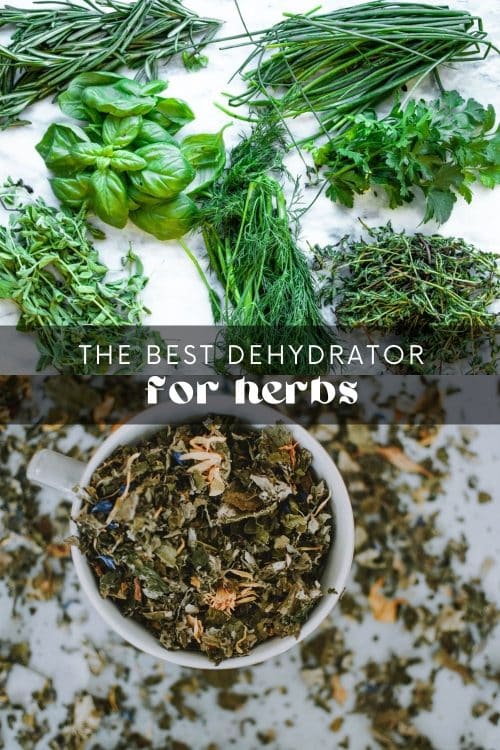
If you have a surplus of fresh herbs, dehydrating them is a great way to preserve their flavor and nutrients. Dried herbs can last for years, making them a cost-effective and convenient option for cooking! However, not all food dehydrators are suitable for drying herbs. Herbs are delicate and require gentle drying to retain their flavor, color, and aroma.
So, what makes a good herb dehydrator? Let's take a look at some of the best herb dehydrators on the market and what sets them apart!
WANT TO SAVE THIS RECIPE?
Enter your email below and we'll send it straight to your inbox. Plus you’ll get great new recipes from us every week!
What Is a Herb Dehydrator?
Dehydrating herbs is the best way to prolong the life of your fresh herbs and spices. Now, don't get me wrong, I still love the traditional methods of preserving herbs, like air drying. But let's face it, they can be quite messy and often time-consuming!
That's why an herb dehydrator is a lifesaver for those who want to make herb preservation as easy as possible.
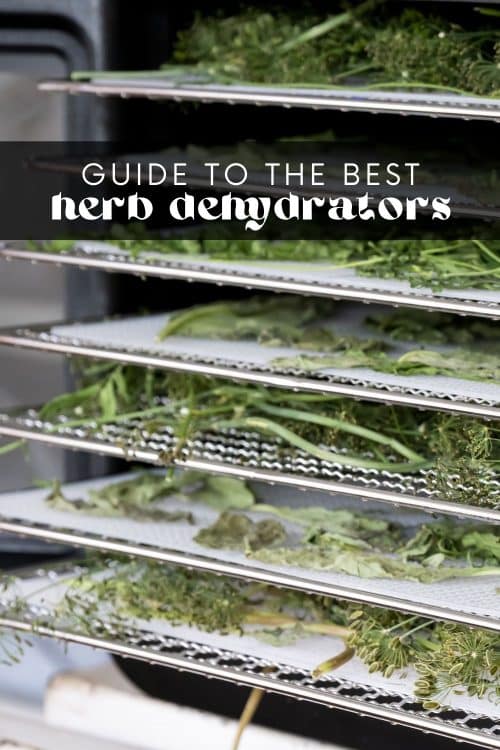
A herb dehydrator is a machine specifically designed to dry fresh herbs. It works by slowly removing the moisture content in herbs using a heating element and a fan. The fan helps circulate hot air throughout the dehydrator, evenly drying out the herbs without cooking them.
The best food dehydrator for herbs and spices allows you to dry out your herbs at a consistent temperature, preserving their flavor and nutrients. This means you can enjoy your homegrown herbs all year round without compromising quality or taste.
Types of Herb Dehydrators
There are many options for herb dehydrators, from simple countertop units to more advanced models. I'll cover the best ones in a moment, but it helps to understand your options first.
You can choose from two main types: box dehydrators and stackable dehydrators.
Box (or Shelf) Dehydrators
Box-type dehydrators are exactly what they sound like – they're shaped like boxes, usually with multiple shelves inside. Depending on the model, they have a fan and heating element at the back or side.
The design of these models means that you can dry out a large amount of herbs at once without them overlapping.
Box dehydrators are a good choice for commercial use and for people who want to dry large batches of herbs or make products like fruit leather and beef jerky. As you might expect, this means they're usually more expensive than stackable dehydrators.
Stackable Dehydrators
Stackable dehydrators are an excellent option for drying smaller amounts of herbs. These models consist of multiple trays that can be stacked on top of one another, and they're much more compact than box dehydrators. A fan is positioned above or below the trays, evenly circling hot air around the herbs.
While you can't dry as many herbs at once with a stackable dehydrator, they're much more compact and affordable. Some models also let you add or remove trays to adapt for different uses.
The Best Herb Dehydrators
The NESCO Snackmaster Pro Food Dehydrator has to be my top pick for an all-in-one solution. This model can be used for drying herbs and making other dehydrated foods! I really like how it ensures even heat distribution and has an adjustable temperature control ranging from 95°F to 160°F.
Made in the USA, NESCO Snackmaster Pro includes 4 trays and doesn’t need to be manually rotated! There’s also the option to buy more trays and expand the unit to 12 – perfect for large herb batches.
Key information:
- Adjustable thermostat with a good choice of temperatures
- 600 watts of drying power
- Includes 4 trays with the option to buy more
- BPA-free plastic trays
If space-saving is what you're after, then this folding food dehydrator from Brod & Taylor is your answer. I love how this model has a large capacity yet can be folded down for easy storage. It's also super quiet, meaning no loud noises while in use! The Brod & Taylor SAHARA is pretty pricey but is a great investment if you're dehydrating lots of herbs or other foods.
The Sahara Folding Food Dehydrator also has an adjustable thermostat and accurate temperature settings. Plus, its user-friendly design makes it easy to clean and maintain!
Key information:
- Foldable design for easy storage (folds to one-third of its size)
- Stainless steel trays with 11 square feet of drying area
- Digitally-controlled 700W dual heaters for precise temperature controls
- Good for dehydrating delicate herbs and other foods
If you're new to dehydrating herbs and spices or want a more budget-friendly option, the Cosori CFD-N051-W Food Dehydrator is a great choice. It's compact, easy to use, and has five stackable trays for drying smaller batches.
It also comes with a one-touch digital control panel and an adjustable timer ranging from 30 minutes to 48 hours. It's also super easy to clean since the trays are dishwasher-safe!
Key information:
- 350 watts of drying power
- Adjustable timer and temperature control
- Comes with five BPA-free stackable trays – options to add more
- Overheat protection and isn't noisy while in use

If you're looking for a versatile but small machine, don't overlook the OSTBA Food Dehydrator. This model comes with 5 stackable trays, but they can also be rotated to two different levels of drying space, depending on your needs.
The temperature range of 96-158℉ makes it suitable for drying various herbs, fruits, and vegetables. My only issue with this model is that you must turn the bottom trays periodically for even drying – which isn't noted in the manual. However, at its price point and with its features, the OSTBA is still a good choice for preserving herbs.
Key information:
- Affordable price compared to other models
- 360° circulation airflow for even drying
- Adjustable temperature ranges from low to high for different foods
- Dishwasher-safe trays and stainless steel control panel
Powerful, efficient, and versatile – that's what the Excalibur 3948CDB Electric Food Dehydrator Machine is all about. If you're serious about dehydrating herbs and spices and think you'll be using your dehydrator frequently, this is definitely the one for you.
The Excalibur 3948CDB has 9 trays, the most out of all the models mentioned so far! This means you can dry large herb batches at once and even make fruit chips or jerky. It also comes with an adjustable temperature range of 95-165°F and a timer for up to 48 hours!
Key information:
- 600 watts of drying power
- Made in the USA with premium materials
- Digital thermostat and timer for precise control
- Comes with 9 non-stick tray inserts for easy cleaning
How to Choose The Best Herb Dehydrator
Now, I've shared some of my favorite dehydrators; you might be wondering how to choose the best one for you. After all, we all have different needs and preferences!
Before you start shopping, consider the following features:
- Temperature control: According to the NCHFP, herbs should be dried at low temperatures between 95°F and 125°F, depending on the humidity of your area. Look for a dehydrator with adjustable temperature settings to get your herbs to the perfect dryness level.
- Size and total capacity: Consider how many herbs you’ll dehydrate and what size of dehydrator will fit in your kitchen. Some units have multiple trays or shelves that can dry a larger quantity in one go, while others are more compact and ideal for small batches.
- Energy efficiency: If you're looking for an environmentally friendly option, opt for a model with energy-saving features. Look for models with multiple thermostats to help regulate the temperature and use less power.
- Price: Factor in the cost of a dehydrator and compare it to similar models. Some dehydrators have added features that might be worth paying more for, such as digital displays or built-in timers.
- Timer: Some models feature a timer, so you can set it to a specific number of hours and forget about it. Again, this is a great option if you want to multitask while your herbs are drying or want to monitor the drying process.
- Ease of cleaning: Look for a machine with removable trays that make cleaning easy. This will help keep your dehydrator sanitary and in good condition for years!
How to Store Dry Herbs
Once you've successfully dehydrated your herbs, storing them properly is important to maintain their flavor and potency. Here are a few tips for storing dried herbs:
- Keep them in an airtight container: Dehydrated herbs should be stored in glass jars or plastic containers to keep out moisture and air.
- Store in a cool, dark place: Heat, light, and air can all cause herbs to lose their potency. Store your dried herbs in a dry place to keep them flavorful.
- Label and date: Always label your jars with the type of herb and the date it was dried – so you can keep track of its shelf life.
- Don't crush until ready to use: Whole dried herbs will retain their flavor longer than crushed herbs, so it's best to only crush them right before using!
Final Thoughts
It doesn't matter if you grow your own herbs or buy them from the grocery store – preserving them is a fantastic way to have flavorful herbs all year round. So, if you use a lot of herbs in your cooking, investing in a good dehydrator is definitely worth it!
Remember, low heat and air circulation are key to successfully dehydrating herbs. Choose a dehydrator that allows for precise temperature control and has good airflow. Whether you need a compact machine or a heavy-duty option for frequent dehydration, the above models are all excellent choices!
Leave a Reply