


Who doesn't love a plant you can grow with little to no effort? Russian sage is a good choice for beginners or anyone who wants a hands-off approach to gardening. Just give it the right conditions, and it'll do the rest for you!
WANT TO SAVE THIS RECIPE?
Enter your email below and we'll send it straight to your inbox. Plus you’ll get great new recipes from us every week!
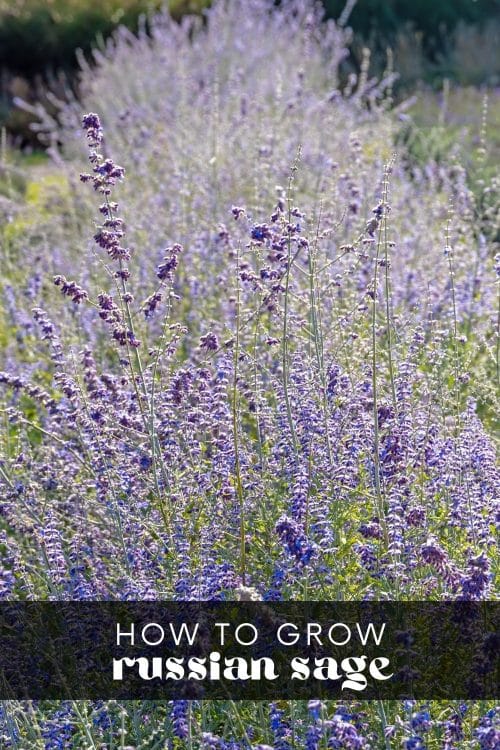
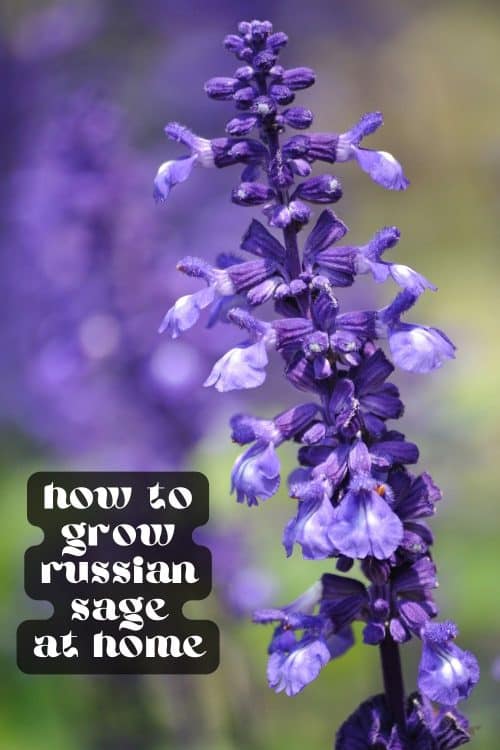
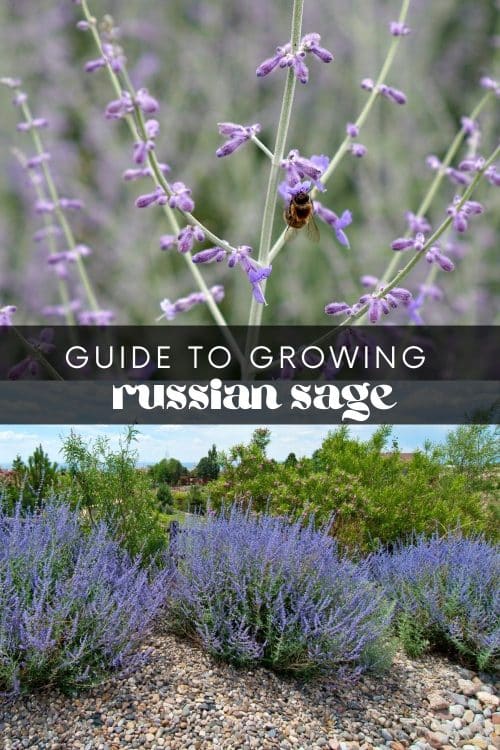
Russian sage (Salvia yangii) is native to Asia and loves to grow in hot and dry conditions. It's a woody perennial that can grow to 3-5 feet with gray-green leaves and purple-blue flowers. Russian sage has a long bloom time and looks a lot like lavender but smells different - it has a sage-like scent.
Formally known as Perovskia atriplicifolia before it was reclassified in 2017, Russian sage is a member of the mint family and is related to other herbs like rosemary, thyme, and oregano. But while it's part of the same family, Russian sage is grown for its ornamental value rather than for cooking!
Let's take a look at how to grow Russian sage in your own garden.
What Is the Best Month to Plant Russian Sage?
The best time to plant this fast-growing shrub is in the late spring to early summer after the last frost has passed. Depending on your location, this could be any time from late April to early June.
Container-grown Russian sage can also be planted later in the season - around 6 weeks before the first frost in your area. Avoid planting in the middle of summer as this can cause stress on the plant due to heat.
How Long Does Russian Sage Take to Grow?
Once established, Russian sage is a relatively fast-growing plant. It can easily grow up to 5 feet tall in one season in the right conditions!
However, starting Russian sage from seed can be time-consuming, with germination taking up to 4 months. It then has to establish itself before reaching its full potential. Because of this, many gardeners choose to start with a young plant or propagate from cuttings instead.
What Are the Best Growing Conditions for Russian Sage?
Russian sage is a super easy plant to grow, but it does have a few preferences when it comes to its growing conditions. If you're ever in doubt, remember this perennial border plant is native to the steppes of central Asia, so it likes a hot and dry environment! Here are some tips to ensure your Russian sage thrives:
Sunlight
Full sun is a must for Russian sage to bloom. It doesn't tolerate shade, as the stems will become leggy, and the flowers will be sparse. The shade will also cause the stems to flop and reach toward the sun, making the plant look unbalanced. Aim for at least 6-8 hours of direct sunlight per day.
Soil
The poorer the soil, the better! Dry, rocky, and sandy, poor soil that is well-drained is perfect for Russian sage. Heavy or rich soils can cause the roots to rot and stunt growth - plant in alkaline soil (around 7.0-8.0 pH) for best results.
Temperature and Humidity
Russian sage is a hardy perennial and can tolerate a range of temperatures, but it prefers warm climates. A temperature of around 70-80°F (21-27°C) is ideal for growth, and it can withstand temperatures as low as -30°F (-34°C) but will die back and return in the spring. It also doesn't require high humidity levels.
Container
Did you know you can grow Russian sage in containers? This is an excellent option for those who don't have a suitable garden bed or want to keep the plant contained. Russian sage isn't as invasive as other members of the mint family, but it can grow beyond its designated area if left unchecked.
Choose a large, heavy container to prevent the plant from tipping over, and make sure it has good drainage holes. Use well-draining soil and add some coarse sand or gravel to improve drainage.
How to Grow Russian Sage
Starting Russian sage from seed is possible but not always the best idea. The reason for this is some Russian sage cultivars don't grow true from seed, meaning they won't have the same characteristics as their parent plant. Germination can also take as long as 4 months, and then you have to wait for the plant to establish to see any blooms. It's easier to propagate Russian sage or buy mature plants from a nursery.
However, you can start your Russian sage plants from seed if you don't mind the wait and want to experiment!
Growing Russian Sage from Seed
- Start your seeds indoors 8 weeks before the last frost date in your area.
- Cold stratification can help improve germination and mimic the natural winter cycle of the plant. To do this, place your seeds in a damp paper towel inside a plastic bag and store it in the refrigerator for 3-4 weeks.
- Fill a seed tray or small container with potting mix and moisten it.
- Scatter the seeds on top of the soil, gently pressing them in but not covering them completely.
- Cover the tray or container with plastic wrap to create a greenhouse effect and put it in a warm, sunny location.
- Remove the cover and thin out the seedlings once they have grown a few inches tall.
- Transplant the young plants into individual pots when they are large enough to handle. Always harden off young seedlings before planting them outside. Do this by gradually exposing them to outdoor conditions over a week.
You can also plant your seeds directly into the ground once the risk of frost has gone and the soil has warmed up.
Planting an Established Plant
- Buy a container or bare-root plant from a garden center or nursery.
- Prepare the planting area by removing any weeds or debris.
- Dig a hole big enough for the root ball of your plant. If planting a few, space plants around 18 inches apart.
- Loosen the plant's roots gently and place it in the hole. Backfill with soil and press down lightly to remove air pockets.
- Water the plant thoroughly after planting.
How to Propagate Russian Sage
The best way to propagate Russian sage is through basal cuttings. These cuttings are from the base of an established plant and are more reliable and faster than growing from seeds. You're also guaranteed to get a true clone of the parent plant this way!
Here's how to propagate Russian sage:
- Wait until early spring when new shoots begin to emerge from the base of the plant.
- Using a sharp, clean knife, cut off one of the new shoots (around 3-4 inches long) at the base of the plant. It should have some healthy roots attached.
- Remove any lower leaves that may be touching the soil when you plant it.
- Use your finger to create a hole in a pot filled with well-draining potting mix and insert the cutting.
- Water well and leave it somewhere with plenty of sunlight.
- Once it shows signs of growth, you can then move it to a larger pot or into the ground.
6 Tips for Growing Russian Sage
With the right growing conditions and some slight upkeep, Russian sage should do well in your garden. Here are a few tips to keep in mind:
Water Established Plants Sparingly
New plants need frequent watering to help them establish their root system, but once established, Russian sage is a drought-tolerant plant with low maintenance needs. It loves dry climates and can even survive periods of drought without showing any signs of distress. Water sparingly to avoid over-watering - this can cause root rot.
Add Some Support
Russian sage has the tendency to become top-heavy as it grows. Add some plant stakes to keep the plant upright and prevent it from flopping over.
Mulch in the Winter
If you live somewhere with harsh winters, adding some mulch to the base of your Russian sage can help protect the roots from freezing temperatures. The rest of the plant will die back in the late winter, but with some mulch, it should return strong in the spring.
Prune in Early Spring
Cut the woody stems to about 6 inches in early spring before new growth begins. Deadhead any spent Russian sage blooms throughout the summer to encourage continuous blooming. You should also remove any suckers to avoid the plant spreading too much. The silvery stems can be left to die naturally when the blooming period ends in early fall.
Put Away the Fertilizer
There's no need to fertilize this tough plant! But if you want to give it a boost, add a light layer of compost or organic matter around the base of the plant in the spring.
Watch Out for Root Rot
Common pests and diseases don't usually bother with Russian sage. Your biggest problem to avoid is root rot! Russian sage hates waterlogged soil, so make sure to plant it in well-drained soil and take care during wet winters.
There's some evidence that Russian sage was used for medicinal purposes in the past, but nowadays, it's usually used as ornamental grasses. It's not recommended to consume Russian sage - the leaves can be toxic if ingested in large amounts.
Sunlight is key for getting established Russian sages to bloom. Your plant needs at least 6 hours of full sun each day. If it's still not blooming, try pruning in early spring to encourage new growth for the coming season. Also, make sure the plant is not getting too much nitrogen from nearby fertilizers, as this can also prevent blooming. New plants are unlikely to bloom in the first growing season.


Leave a Reply