




Are you looking for a beautiful and easy-to-grow flower? Irises may be the perfect choice for you! These stunning flowers come in various colors and sizes, making them a great addition to a home garden. However, there's more to irises than just aesthetics. There are many different types, each with unique characteristics and growing requirements.
WANT TO SAVE THIS RECIPE?
Enter your email below and we'll send it straight to your inbox. Plus you’ll get great new recipes from us every week!
The word iris is derived from the Greek word for "rainbow," which is fitting given the wide range of colors these flowers come in. From deep purples and blues to bright yellows and pinks, there's an iris to suit everyone!
But how exactly do you grow irises? Let's take a look at everything you need to know.
Different Types of Irises
As part of the Iridaceae family, irises are a long-living perennial plant. There are over 300 known species, with many more hybrid iris varieties. Depending on which type you choose, some do best in dry soils, while others prefer moist environments.
The best way to differentiate between the different types of irises is to look at how you plant them. Some come from bulbs, while others grow best from rhizomes. The most common types of irises are bearded, but there are also beardless and crested varieties.
Bearded irises are easily recognizable by their "beard" – a fuzzy strip that runs along the center of each petal.
Beardless irises have no fuzziness and instead have smooth petals. Crested irises, as their name suggests, have a unique crest or ridge on their falls (the lower petals).
Here are some popular types of irises to consider for your garden:
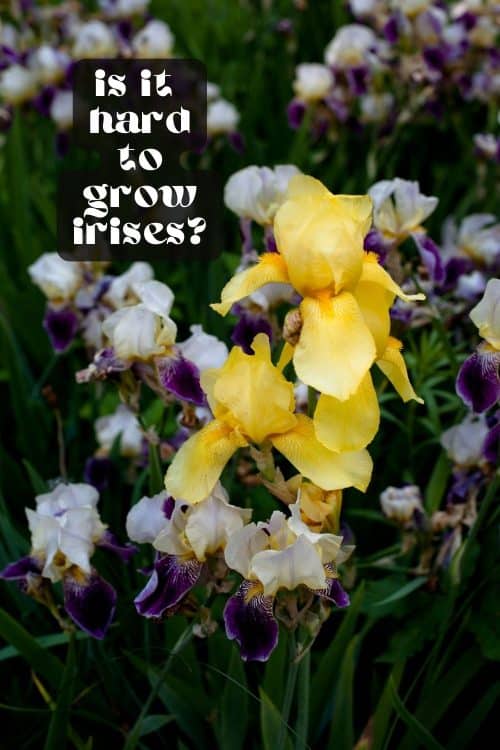
- Bearded Iris: This is probably the most well-known type of iris. It has a distinct beard and comes in various colors, such as purple, yellow, and white.
- Dwarf Crested Iris: A smaller variety of iris, this type is perfect for rock gardens or borders. It has a unique crest on its falls and blooms in shades of blue and purple. These dwarf irises grow well in part shade.
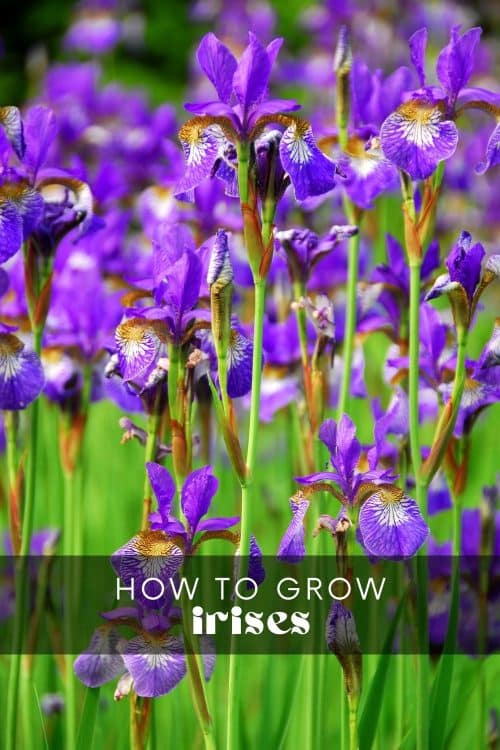
- Siberian Iris: This flower is of the beardless variety and is known for its delicate, lace-like petals. It comes in shades of blue, pink, and purple and does well in drought conditions.
- Japanese Iris: If you like large flowers, this is the one for you. This type works well in moist conditions – pond edges or boggy areas are perfect. It has large, showy flowers in white, blue, and purple shades.
While these flowers are all part of the same family, each has its own unique needs. Always research each type of iris before planting to give it the best possible growing conditions.
However, please note that regardless of which variety you choose, irises are toxic to cats and dogs.
What Is the Best Time of Year to Plant Irises?
The answer to this question will also depend on the type you’re planting! Bulb-grown iris plants can be planted in the early fall. Irises grown from rhizomes, such as Siberian irises, can be planted in late summer through early fall. This time frame allows both types to establish themselves before the colder months arrive.
If you're growing container-grown irises, they can be planted anytime from spring to fall.
What Are the Best Conditions for Growing Irises?
Once you've chosen which type of iris to plant, you must provide it with the best growing conditions. Opt for a bearded variety if you want easy-to-grow, fairly low-maintenance iris flowers.
Other factors to consider include:
Light
Most irises bloom best in full sun, but some varieties can handle partial shade. Plant your irises in a sunny location that gets around 6-8 hours of full sun daily.
Temperature
The best temperature for planting irises is around 40-50°F (4°C to 10°C). Once established, they can handle much colder temperatures. Bearded irises are winter hardy and can handle temperatures as low as -25°F (-32°C).
Soil
You can grow different irises in various soil types, so long as it is well-draining! If your soil type is quite heavy, mix it with organic matter to help drainage. Sandy, rocky, and clay soils can all work well for irises. The pH level should be neutral to slightly acidic, with 6.5 to 6.8 being ideal.
If you're planting moisture-loving irises like Japanese irises, plant them near a water source or in an area that retains some moisture.
Container
Some smaller irises, like dwarf bearded irises, can do brilliantly in containers. You'll want to use a well-draining potting mix and choose a pot at least 12 inches wide and deep. Drainage holes are also a must! Potted irises can be kept outside, in a greenhouse, or in a cool room in a sunny spot.
How to Grow Irises
Unlike many other plants, you don't often grow irises from seeds. It is possible to do so, but it takes a while to see any blooms. Instead, it's best to grow irises either from bulbs or rhizomes.
Growing Irises from Bulbs
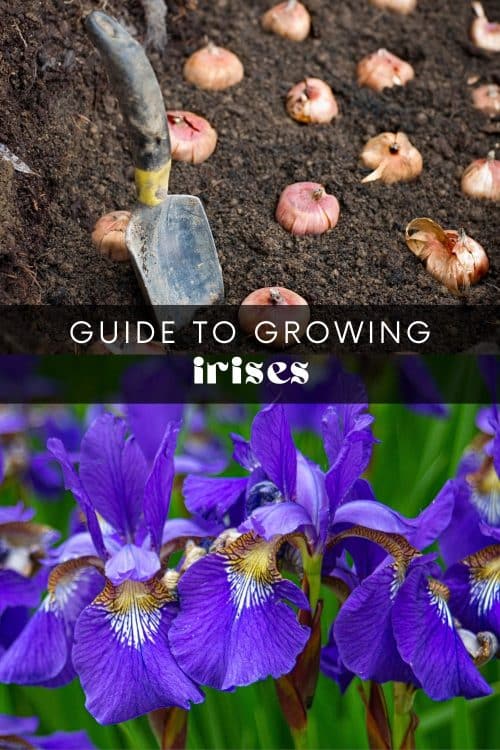
- Iris bulbs are best planted as soon as they are purchased. Prepare the planting area by removing any weeds and adding organic matter (if needed). There's no need to soak iris bulbs before planting.
- Dig a hole about 2-3 times deeper than the bulb's height. This is usually around 5 inches deep.
- Space your bulbs about 4 inches apart and cover them with soil.
Growing Irises from Rhizomes
Rhizomes are thick, fleshy roots that grow horizontally below the soil surface. They are the most common way irises are propagated.
- Prepare your soil as you would for bulbs, removing any weeds and adding organic matter.
- Check your rhizomes for any signs of damage or disease before planting. Cut away any damaged or diseased parts.
- You can soak your rhizomes in water for a few hours to help them hydrate and make the roots more pliable.
- Plant the rhizomes just beneath the soil surface. They should be barely covered with soil as rhizomes require sunlight to grow. The roots should be well spread out and covered in soil. The tops of the rhizomes should be visible.
- Give each rhizome enough space to grow and spread. This could be anywhere from 6-18 inches, depending on the size it grows to.
- Press the soil gently around the rhizome to secure it in place.
How to Divide Irises
It's a good idea to divide your irises every 3-5 years. This is especially true for the bearded and moisture-loving irises. Over time, they can become overcrowded and produce fewer blooms. The roots can also become diseased or damaged if not given enough space to grow. Here's how you can divide your irises:
- To divide your irises, wait until after the blooming season (usually late summer).
- Carefully dig up the entire clump of irises. Gently shake off excess soil and remove any dead or damaged foliage.
- Cut or pull the rhizome into sections. Each section should have at least one fan of leaves and healthy roots.
- Discard old rhizomes that don't have any leaf fans.
- Follow the planting instructions mentioned above to replant your divided iris rhizomes.

How Often Should You Water Irises?
For most irises, it's important to keep the soil consistently moist but not waterlogged. Water them when the top inch of soil is dry. Bearded irises have a good drought tolerance, but Japanese and Siberian irises need consistently moist soil to thrive.
Iris Plant Care Tips
Aside from providing enough sunlight, spacing, and water, here are some additional tips to help your irises thrive:
Fertilize
Use a balanced, low-nitrogen fertilizer (6-10-10) in early spring before the irises start to bloom. This will provide the necessary nutrients for healthy growth and blooming.
Prune
Remove any dead or diseased foliage as needed throughout the growing season. After blooming, you can also trim off spent flowers to encourage more blooms. Once the growing season ends, leave the foliage alone until it dies back naturally.
Pest Control
The most common pests that can affect irises are iris borers. These pests feed on the rhizomes and can cause severe damage. To prevent them, regularly inspect your irises for any signs of infestation and remove affected parts immediately. This is another reason you should divide and replant your irises every 3-5 years.
Iris Plant Common Problems and Solutions
There's nothing more annoying than seeing your beautiful flowers suffer from pests or diseases. Here are some common problems and how to fix them:
- No blooms: This is usually due to overcrowding and lack of sunlight. Don't plant your rhizomes too deep or close together, and ensure they're getting enough sunlight. Also, avoid planting your irises near trees or other tall plants that may block the sun. Too much fertilizer can also lead to no bloom. Your irises only need to be fertilized at the start of the growing season.
- Yellowing leaves: This can be a sign of underwatering or overwatering. Double-check how much water your irises are getting and adjust accordingly. Always ensure good drainage to prevent waterlogging, which can cause root rot.
- Yellow or brown spots on leaves: This can be a sign of fungus or bacterial diseases. Remove any affected foliage and use a fungicide to treat the remaining plant.
- Rust spots on leaves: This is a common fungal leaf spot and looks like orange or rust-colored spots on the leaves. The rust fungus can stain your hands and clothing if touched. Carefully remove affected foliage and use a fungicide to treat your irises.
- Ink spots on leaves: If you see black spots or streaks on your iris leaves, you probably have ink disease. This is caused by a fungus that thrives in wet conditions. Remove affected leaves and use a treatment to prevent the spread. If it doesn't improve, you may need to dig up and discard the infected plants.
Most irises bloom in late spring to early summer. Although, some species can bloom again in late summer or early fall. The Iris Sibirica and Iris Germanica are known to bloom all summer!
Yes, irises are not safe for cats or dogs to ingest.
Depending on the species, most irises grow best in full sun to partial shade. They also thrive in well-drained soil that is rich in organic matter. Avoid planting them near trees or other tall plants that may block sunlight and compete for nutrients.
Yes, irises are perennial plants, which means they will come back year after year - so long as they're cared for. Some can last for up to 20 years!


Leave a Reply