
Learning how to make this hummingbird food recipe is as simple! Get the exact directions here and keep those little birds coming back to your yard!
Earlier this summer I noticed that two cute little hummingbirds were frequenting my flowers so I made this hummingbird food recipe and hung up a feeder. At the store, I noticed that hummingbird food can be pricey!! Don't pay for it! It's so easy to learn how to make hummingbird food yourself and all you need is some sugar, water, and a heat source.
WANT TO SAVE THIS RECIPE?
Enter your email below and we'll send it straight to your inbox. Plus you’ll get great new recipes from us every week!
Why do you have to boil sugar water for hummingbirds?
In the video below where I show you how to make the standard hummingbird food recipe, I use a pan on the stovetop but just as often I'll use a large pyrex bowl in the microwave. Both work very well! The reason you heat the water until it is boiling is two-fold.
One reason is so all of the sugar will dissolve and stay in solution. You don't want grainy hummingbird food, that would end up being an inconsistent food source, not to mention it would clog up your feeder.
The second reason is to be extra certain there isn't any mold or bacteria in the food you are making. Once mold gets in your feeder it is hard to get out and it can be toxic to hummingbirds.

What is the correct hummingbird food recipe sugar water ratio?
Let's do a little math review for this hummingbird food recipe. Ratios are often given by saying four to one or written 4:1. When a ratio is given instead of an exact measurement, it's actually very nice because you can scale whatever you're making up or down to suit your needs.
A 4:1 ratio means there are 5 parts total - think of it as a pie with 5 slices. 4 of the slices are water, and 1 slice is sugar.
The only Recipe for Hummingbird Food you'll ever need
Making hummingbird food is easy and involves creating a simple sugar solution that mimics the nectar from flowers, which is the primary food source for hummingbirds. Here's a step-by-step guide on how to make hummingbird food:
Hummingbird Food Ingredients
- White granulated sugar
- Water
How to Make Hummingbird Sugar Water (Ratio 4 to 1)
- Measure the Ingredients:
- Use a ratio of 1 part sugar to 4 parts water. For example, you can use 1 cup of sugar and 4 cups of water to make a larger batch, or reduce the measurements for a smaller quantity.
- Boil the Water:
- In a saucepan, bring the water to a boil. This helps to dissolve the sugar and remove any impurities.
- Add Sugar:
- Once the water is boiling, carefully add the sugar to the boiling water.
- Stir continuously until all the sugar is completely dissolved. This usually takes just a minute or two.
- Cool the Solution:
- Remove the saucepan from the heat and allow the sugar water solution to cool to room temperature. It's essential to let it cool completely before using it in your hummingbird feeder.
- Fill the Feeder:
- Pour the sugar water solution into your clean hummingbird feeder. Be sure not to overfill it, leaving some space at the top to prevent spillage.
- Hang the Feeder:
- Hang the hummingbird feeder in a location where it's easily visible but safe from predators, such as cats. Hummingbirds are more likely to visit if the feeder is placed near flowering plants or in their natural flight path.
- Monitor and Refill:
- Check the feeder regularly to ensure it stays clean and filled with fresh sugar water. During hot weather, sugar water can spoil more quickly, so it's important to change it every 2-3 days or sooner if it appears cloudy or discolored.
DIY Hummingbird Food Tips
- Red Dye: There is no need to add red food coloring to the hummingbird food. Many experts recommend avoiding it as it may be harmful to hummingbirds.
- Keep It Clean: Maintain good hygiene by regularly cleaning the feeder with hot, soapy water and rinsing it thoroughly before refilling. Mold or bacteria can harm hummingbirds.
- Avoid Honey and Artificial Sweeteners: Stick to using plain white granulated sugar. Honey and artificial sweeteners can be harmful to hummingbirds.
- Don't Use Distilled Water: While tap water is generally safe for making hummingbird food, using distilled water is unnecessary.
You can boil the mixture on the stovetop or in the microwave in a microwave-safe container.
Best Types of Hummingbird Feeders
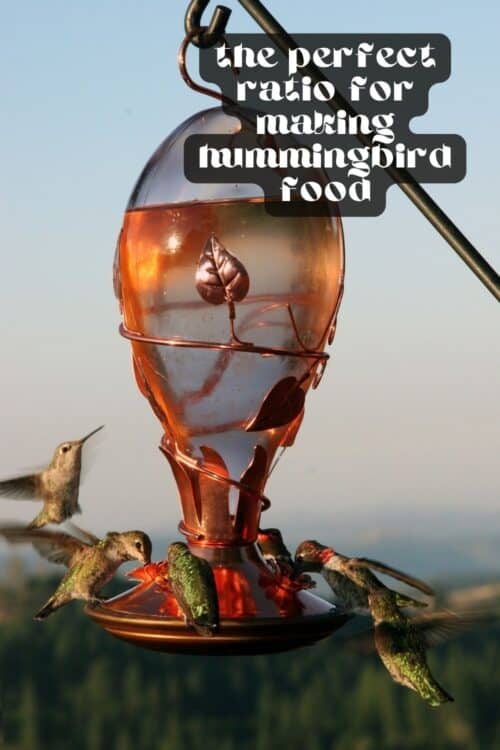
The best kinds of hummingbird feeders are those that are designed with the needs of hummingbirds in mind while also being easy to clean and maintain. Here are some popular types of hummingbird feeders:
- Inverted Tube Feeders:
- These are among the most common and traditional hummingbird feeders.
- They consist of a plastic or glass container filled with sugar water and an attached feeding port.
- The feeding ports often have red or yellow plastic flowers to attract hummingbirds.
- Inverted tube feeders are available in various sizes and styles.
- Saucer or Dish Feeders:
- Saucer or dish feeders are flat or shallow feeders with a basin for holding the sugar water.
- They are easy to clean and can accommodate multiple feeding ports.
- Some saucer feeders have built-in perches for hummingbirds to rest on while feeding.
- Window-Mounted Feeders:
- These feeders are designed to attach to a window with suction cups, allowing you to observe hummingbirds up close from inside your home.
- They are typically small and may have one or two feeding ports.
- Window-mounted feeders can provide a unique and convenient viewing experience.
- Hanging Ball Feeders:
- Ball-shaped feeders have a spherical container for sugar water and several feeding ports.
- They can attract multiple hummingbirds at once and are visually appealing.
- Some ball feeders are designed to spin when hummingbirds land on them, adding an element of interactivity.
- Decorative and Artistic Feeders:
- Some hummingbird feeders are designed with artistic or decorative elements, making them aesthetically pleasing additions to your garden.
- While their primary function is to provide food for hummingbirds, they also serve as garden decor.
- Drip-Resistant Feeders:
- Drip-resistant feeders are designed to minimize leakage and waste of sugar water.
- They often have features like built-in moats or valves to prevent dripping.
- Ant Moats:
- Ant moats are small cups filled with water that can be hung above the feeder to prevent ants from reaching the sugar water.
- These can be added to various types of hummingbird feeders to keep ants away.
Qualities to look for in a Hummingbird Feeder
- Easy-to-Clean Designs:
- Look for feeders that are designed for easy disassembly and cleaning. Removable parts and wide openings make maintenance simpler.
- UV-Resistant Materials:
- Choose feeders made from UV-resistant materials to prevent fading and deterioration when exposed to sunlight.
- Quality Construction:
- Invest in feeders made of durable materials that can withstand outdoor conditions and last for many seasons.
How often should I change hummingbird sugar water?
Remember to clean your hummingbird feeder regularly (every 2-3 days in hot weather) to prevent mold and bacteria buildup. Hummingbirds are attracted to clean feeders with fresh sugar water. Choose a feeder that suits your preferences and the needs of the hummingbirds in your area, and enjoy the beauty of these remarkable birds visiting your garden.
Hummingbird Food Recipe Ratio FAQs
Now, I know adding food coloring to anything can be controversial. First of all, please remember that food coloring is added in such small amounts to this hummingbird food recipe that it really isn't going to influence the food.
But if you are opposed to adding it, then don't! I find they prefer colored water. Another solution is to purchase a feeder that is tinted. Problem solved!
The number of hummingbird feeders you need depends on several factors, including the size of your outdoor space, the number of hummingbirds in your area, and the availability of natural nectar sources. Here are some considerations to help you determine how many hummingbird feeders you might need:
Garden Size: If you have a small garden or balcony, one well-placed hummingbird feeder may be sufficient to attract and feed hummingbirds. In larger gardens or outdoor spaces, you may consider placing multiple feeders to ensure that hummingbirds can find them easily.
Hummingbird Population: The number of hummingbirds in your area will impact the demand for feeders. If you live in an area with a high population of hummingbirds, you may need more feeders to accommodate them.
Territorial Behavior: Hummingbirds can be territorial, and some individuals may guard a specific feeder, preventing others from accessing it. In such cases, having multiple feeders spaced apart can reduce competition and conflict.
Feeder Placement: Proper feeder placement is essential. If you have a large garden, you may need multiple feeders strategically placed to ensure that hummingbirds can access them easily. Hang feeders near flowering plants and in areas with good visibility.
Natural Nectar Sources: Consider the availability of natural nectar sources in your area. Hummingbirds are attracted to flowers with nectar, and if your garden has abundant flowering plants, you may require fewer feeders. However, during seasons when flowers are scarce, more feeders can be beneficial.
Seasonal Variation: The number of feeders you need may vary seasonally. During migration periods or when hummingbirds are more active in your region, you may want to increase the number of feeders to accommodate their increased presence.
Observation Goals: If you enjoy watching hummingbirds and want to maximize your opportunities for observation, having multiple feeders can provide you with more opportunities to see these fascinating birds up close.
In general, it's a good idea to start with one or two feeders and monitor hummingbird activity. If you find that the feeders are frequently visited and there is competition for access, you can consider adding more feeders. Additionally, placing feeders at different heights and locations can help distribute hummingbirds evenly and reduce territorial behavior.
Ultimately, the number of hummingbird feeders you need is a flexible decision based on your specific circumstances and goals for attracting and observing these beautiful birds.
Hummingbirds primarily feed on nectar from flowers, which provides them with the energy they need for their high metabolism. Nectar serves as their main source of carbohydrates. However, hummingbirds have diverse dietary needs, and their diet also includes insects and spiders for protein. Here's what hummingbirds eat:
Nectar: Nectar from flowers is the primary food source for hummingbirds. They are attracted to brightly colored, tubular flowers that contain sweet nectar. Hummingbirds have long, specialized bills and extendable, tube-like tongues that allow them to reach deep into flowers to extract nectar. The nectar provides them with sugars and energy.
Insects and Spiders: Hummingbirds are insectivorous and supplement their diet with insects and spiders. They catch insects in flight or glean them from leaves and branches. Insects and spiders provide essential protein and other nutrients, especially during the breeding season when raising chicks.
Tree Sap and Fruit Juice: Hummingbirds may also consume tree sap and fruit juices when nectar sources are scarce or during migration. They are known to visit sap wells created by sapsuckers (a type of woodpecker) and feed on the sugary sap.
Sugar Water from Feeders: Hummingbird enthusiasts often set up hummingbird feeders filled with a sugar water solution to attract and feed these birds. The sugar water mimics the nectar found in flowers and provides an additional food source, especially in areas with limited natural nectar.
Spider Silk: Hummingbirds occasionally use spider silk to construct their nests. While this isn't a primary food source, it's worth noting that they interact with spiders in this way.
This step is completely optional. Some people add a little red food coloring to the water to make it visually appealing to the hummingbirds. However, it's not necessary and should only be done sparingly.
4:1 is the best ratio for hummingbird food. This means 4 parts water to 1 part sugar, which is also the closest ratio to natural flower nectar.
The weather and temperature can affect how long hummingbird sugar water lasts. In warmer weather, it is recommended to change the sugar water every 2-3 days. In milder climates, once or twice a week is enough. Always change the water if it starts to look cloudy or murky!
Both glass and plastic hummingbird feeders can work well, but there are some differences to consider. Glass feeders usually look nicer and aren't as prone to UV damage, but they're often more expensive and are easily broken. Plastic feeders are cheaper and lighter, which also means they can become brittle over time due to sun exposure. If in doubt, choose a feeder that is easy to clean and refill and see how the birds in your area respond!
This depends on where you live. In warmer areas, hummingbirds may never migrate and feeders can be kept out year-round. Other climates will see hummingbirds return in late winter to early spring (February to April). The colder the climate, the later it will be until hummingbirds arrive!
WANT TO SAVE THIS RECIPE?
Enter your email below and we will send it straight to your inbox. Plus you will get great new recipes from us every week!

Recipe for Hummingbird Food
Equipment
Ingredients
- 1 cup sugar
- 4 cups water
- 3 drops food coloring
Instructions
- Combine water and sugar.
- Bring to a rolling boil, stirring frequently (see note).
- Once sugar is dissolved, remove from heat and add a small amount of food coloring, if desired.
- Allow to cool completely.
- Pour into the feeder and enjoy the hummingbirds!
Notes
Looking for more great gardening posts?
- How to Make Hummingbird Food
- Tips for Growing Herbs Indoors
- Building Raised Planter Boxes
- Gardening Tips for Beginners
- Winter Squash Storage
- Garden Soil Preparation for Planting
- Quick and Easy Way to Preserve Tomatoes
- How to Compost
- Best Way to Store Zucchini
- Harvesting Onions and Storing Onions
- Watering Your Garden
- How to Harvest and Freeze Broccoli
- Herb Harvest and Preservation


Sandy S
Please do not use red food coloring in the sugar water as it can harm the hummingbirds. Thank you!
Alli
I said it was optional.
Alli
Great recipe and explanation!