
When pear season arrives, it is very easy to find yourself with an abundance of sweet, juicy fruit all at once. Whether you have a backyard tree bursting with fresh fruit or a great deal at the local farmer's market, no one wants to see that delicious produce go bad. Knowing how to preserve pears properly ensures that you can use that harvest year-round.
Over the years of managing seasonal harvests on the farm, I have tried a variety of preservation methods. Personally, we like to harvest and preserve ours in a variety of different ways since each one can be used for a different type of recipe or even a quick snack. These straightforward methods will allow you to preserve your harvest to be used in recipes throughout each season. I am going to break down how to preserve pears by dehydrating, canning, and freezing.
WANT TO SAVE THIS RECIPE?
Enter your email below and we'll send it straight to your inbox. Plus you’ll get great new recipes from us every week!
Jump to:
What is the best way to preserve pears?
The best way to preserve pears depends entirely on how you plan to use them later. Canning in a light syrup will allow you to use them for baking later. If you want to use them in cobblers or smoothies, freezing pears works well for these types of recipes. Lastly, dehydrating pears turns them into a shelf-stable snack to use for lunches throughout the year.
Key Takeaways
- Choose between 3 simple methods: canning, freezing, or dehydrating!
- Reduces food waste, allowing you to use your harvest year-round.
- Each process uses simple methods and ingredients.
- Perfect for meal prep throughout the year.
Ingredient and Fruit Selection Notes
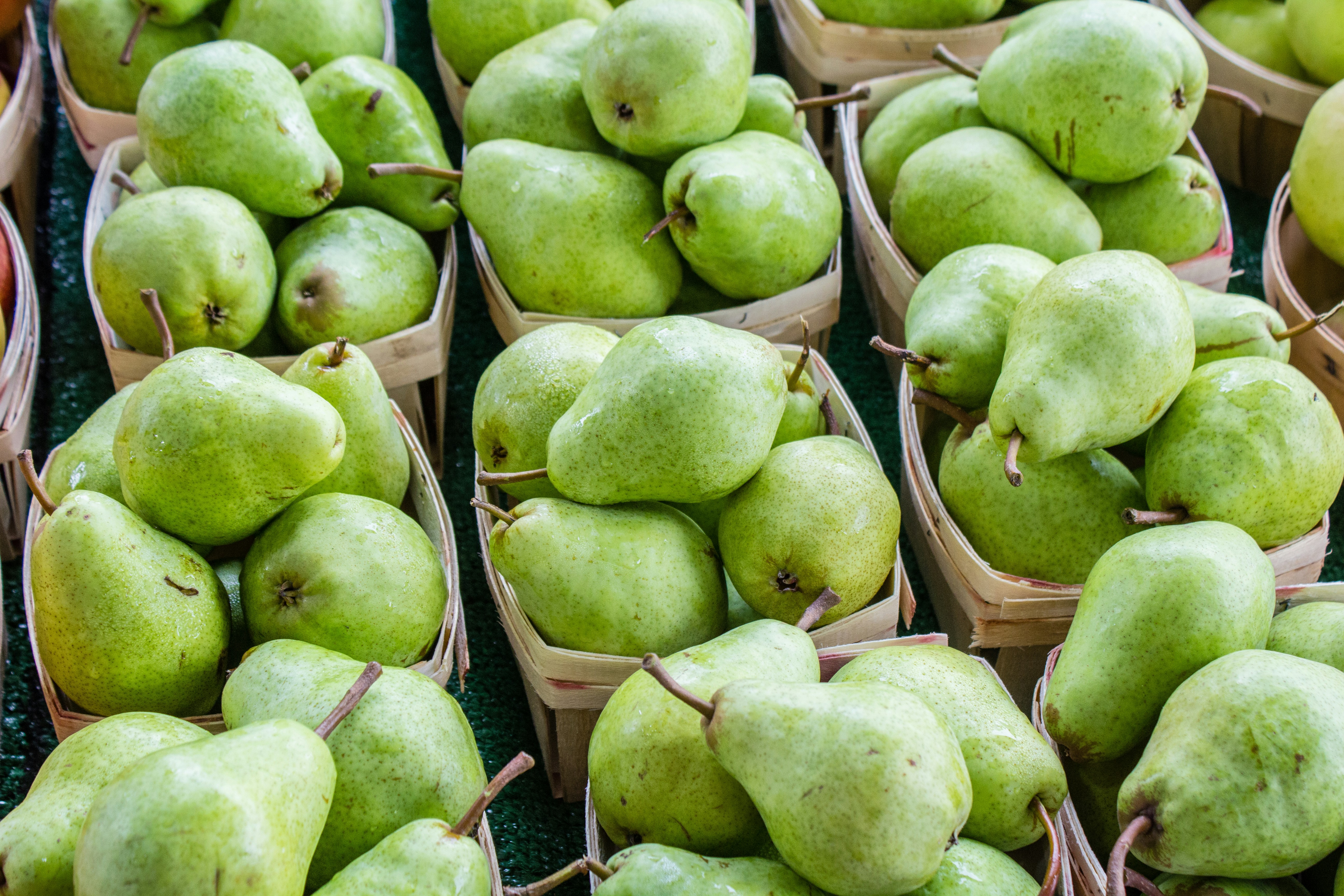
Fresh Pears: Use varieties like Bartlett or Anjou; these hold their shape and should be firm to the touch even when ripe.
Step-by-Step Methods for Preserving Pears
Allow your pears to ripen on the counter first, then refrigerate.
How to Dehydrate Pears
- CUT: Cut in half and core. Peeling preferred. May also slice or quarter.
- DIPPING: Ascorbic acid solution or fruit juice dip
- DEHYDRATOR: 24-36 hours
- APPEARANCE WHEN DRY: pliable, leathery
How to Can Pears
QUANTITY: An average of 17 1⁄2 pounds is needed per canner load of 7 quarts; an average of 11 pounds is needed per canner load of 9 pints. A bushel weighs 50 pounds and yields 16 to 25 quarts – an average of 2 1⁄2 pounds per quart.
PREPARE PEARS:
Wash and peel pears.
Cut lengthwise in halves and remove core. A melon baller or metal measuring spoon is suitable for coring pears.
CANNING:
- To prevent discoloration, keep pears in an ascorbic acid solution. Prepare a very light, light, or medium syrup or pack pears in apple juice, white grape juice, or water.
- Boil drained pears 5 minutes in syrup, juice, or water.
- Fill jars with hot fruit and cooking liquid, leaving ½-inch headspace.
- Adjust lids and process in a boiling water bath.

How to Freeze Pears
PREPARING PEARS
- Select full-flavored pears that are crisp and firm, not mealy in texture.
- Wash, peel, and core.
- Slice medium pears into twelfths, large ones into sixteenths.
SYRUP PACK
- Heat pears in boiling 40 percent syrup for 1 to 2 minutes, depending on the size of the pieces.
- Drain and cool.
- Pack pears and cover with cold 40 percent syrup.
- For a better product, add ¾ teaspoon ascorbic acid to a quart of cold syrup.
- Leave headspace.
- Place a small piece of crumpled water-resistant paper on top to hold the fruit down.
- Seal and freeze.
Pro Tips for Preserving Pears
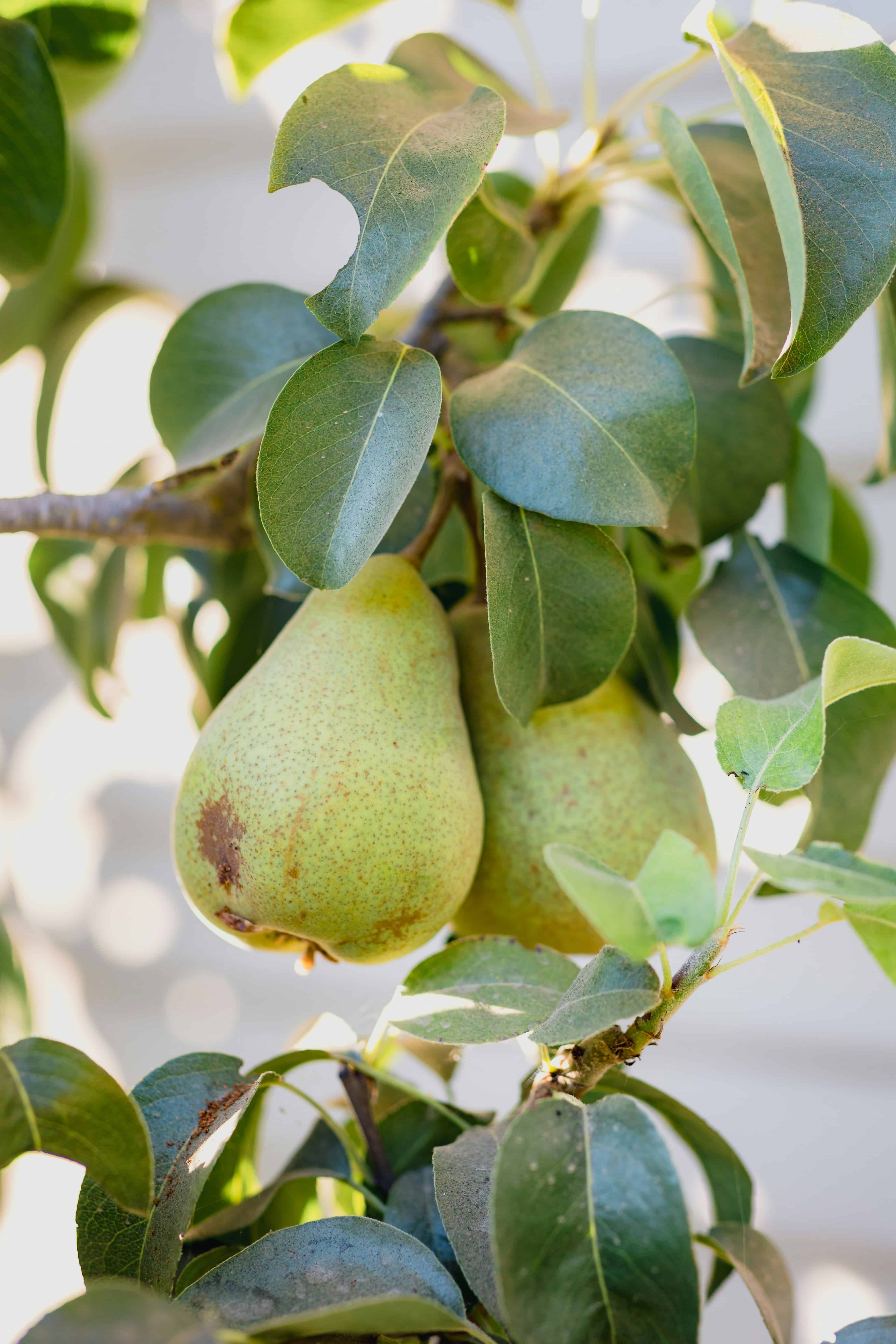
- Bartlett and Anjou Pears are the best choices for preservation because they hold their shape and have a great flavor.
- When canning, choose pears that are ripe but still firm.
- Peeling pears is completely optional and based on preference. For canning and freezing, it is recommended for best texture. For dehydrating, leaving the skin on adds extra fiber.
- When dehydrating, store the dried pears in a glass jar for one week, shaking them daily. If you notice any condensation forming on the glass, place them back in the dehydrator for a few more hours.
Frequently Asked Questions
Leaving the skin on while dehydrating is perfectly fine; it adds extra fiber and texture. When canning or freezing, it is highly recommended to peel first, but it is optional. The skin can become stringy or tough with long-term storage.
Pears should be harvested when they shift slightly from dark leaf-green to a lighter, yellowish-green color, and the stems detach easily with a gentle upward twist. They should still feel firm to the touch but with just a tiny bit of squeeze.
Pears turn brown due to oxidation when exposed to air. To stop this completely, keep your cut pear pieces submerged in an ascorbic acid or lemon juice water bath until the moment you are ready to heat pack them.
Overripe pears are not ideal for canning or freezing, but they can be used to make pear butter, pear sauce, or fruit leather.
What to Make with Preserved Pears
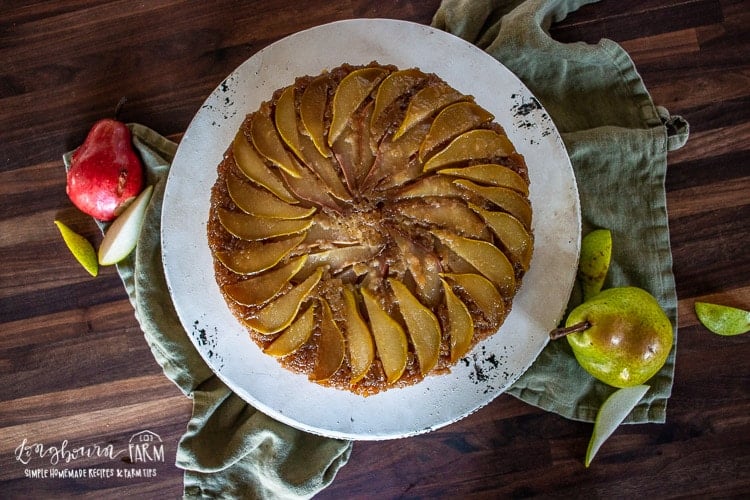
Autumn Salad with Dehydrated Pears
Trail Mix with Dehydrated Pears
Storage and Longevity
Canned Pears
These can be safely sealed and stored for 2 to 3 years, although they are best when consumed within the first 12 months.
Frozen Pears
These can be sealed and stored for up to 12 months.
Dehydrated Pears
These can be stored and sealed for 6 to 12 months.
More Food Preservation Techniques
At the end of a busy harvest season, putting away food for the winter should not feel overwhelming. Learning how to preserve pears is a simple, deeply satisfying skill that honors your hard work in the garden and treats your family to the bright taste of summer all year long. Pick your favorite method, take one batch at a time, and enjoy the beautifully stocked pantry.

Leave a Reply