

When plum season hits in late summer, it tends to happen all at once. One week you are admiring those beautiful blossoms, and then the next week your backyard plum tree is dropping pounds of gorgeous, ripe fruit into your hands. While there is nothing quite as good as biting into a juicy, sun-warm plum straight from the branch, a heavy harvest can become overwhelming, especially when you want to avoid food waste.
That is exactly why it is so important to learn more about how to preserve plums. This is an essential skill for any home cook or modern homesteader. Over the years, I've tried countless preservation methods on the farm, and I always come back to the simplest, most reliable techniques. The best methods are canning, freezing, or dehydrating. These tried-and-true methods use basic tools with a little bit of know-how and will easily lock in that vibrant, sweet-tart flavor to enjoy all year round.
WANT TO SAVE THIS RECIPE?
Enter your email below and we'll send it straight to your inbox. Plus you’ll get great new recipes from us every week!
Jump to:
- What is the Best Way to Preserve Plums?
- Key Takeaways
- Ingredient and Fruit Selection Notes
- Step-by-Step Methods for Preserving Plums
- Pro Tips for Preserving Plums
- Frequently Asked Questions
- What to Serve or Make With Preserved Plums
- More Ways to Preserve Produce
- Storage and Longevity
- More Preservation Methods
What is the Best Way to Preserve Plums?
The best way to preserve plums depends entirely on how you plan to use them later. The three most efficient methods are freezing (ideal for baking and smoothies), dehydrating to make homemade prunes (perfect for shelf-stable snacks), and water-bath canning into jams or syrups (the ultimate method for long-term storage).
Key Takeaways
- Beginner-friendly methods for preserving plums.
- Minimal prep required, no need to peel. Plums are packed with nutrients.
- Easily saves your harvest and extends it to 12 months or more.
- Perfect for busy homesteads.
- Naturally gluten-free!
Ingredient and Fruit Selection Notes
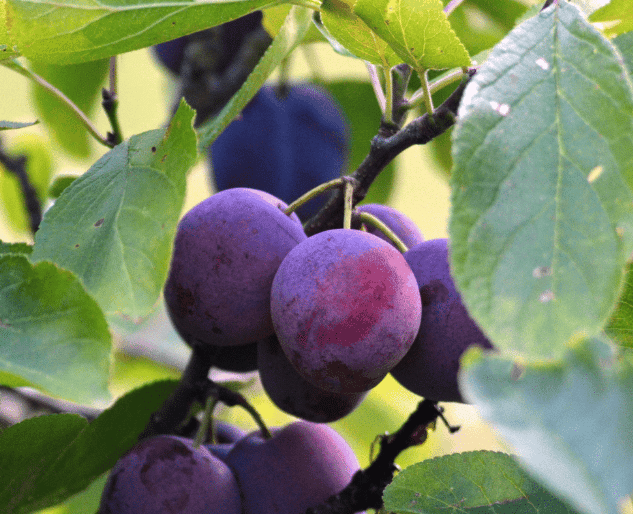
Ripe, Firm Plums: Choose plums that yield slightly to gentle thumb pressure but aren't mushy. Overripe plums turn to pulp too quickly, while underripe plums lack the natural sugars needed for the best flavor.
Step-by-Step Methods for Preserving Plums
How To Dehydrate Plums
- CUT: Leave whole
- DIPPING: If sun-drying, dip in boiling water for 30 seconds or more to check the skins. If drying in oven or dehydrator, rinse in hot tap water.
- DEHYDRATOR: 24-36 hours
- APPEARANCE WHEN DRY: pliable, leathery
Canning Plums
QUANTITY: An average of 14 pounds is needed per canner load of 7 quarts; an average of 9 pounds is needed per canner load of 9 pints. A bushel weighs 56 pounds and yields 22 to 36 quarts – an average of 2 pounds per quart.
PREPARE PLUMS:
Stem and wash plums.
To can whole, prick skins on two sides of plums with a fork to prevent splitting. Freestone varieties may be halved and pitted.
If you use syrup, prepare very light, light, or medium syrup.
HOT PACK
- Add plums to water or hot syrup and boil 2 minutes.
- Cover saucepan and let stand 20 to 30 minutes.
- Fill jars with hot plums and cooking liquid or syrup, leaving ½-inch headspace.
- Adjust lids and process in a boiling water bath: pints for 20 minutes, quarts for 25 minutes.
RAW PACK
- Fill jars with raw plums, packing firmly.
- Add hot water or syrup, leaving ½-inch headspace.
- Adjust lids and process in a boiling water bath: pints for 20 minutes, quarts for 25 minutes.
Freezing Plums
PREPARING PLUMS
- Select firm, ripe fruit soft enough to yield to slight pressure.
- Sort and wash.
- Leave whole or cut in halves or quarters and pit.
SYRUP PACK
- Use cold 40 to 50 percent syrup, depending on tartness of fruit.
- For a better quality product, add ½ teaspoon ascorbic acid per quart of syrup.
- Put plums directly into cold syrup in container, starting with ½ cup syrup to a pint container.
- Press fruit down and add syrup to cover, leaving headspace.
- Place a small piece of crumpled water-resistant paper on top to hold fruit down.
- Seal and freeze.
Pro Tips for Preserving Plums
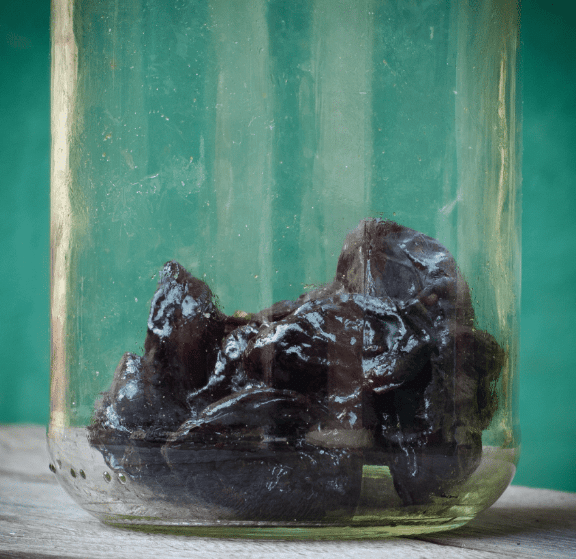
- Don't Peel the Plums: The beautiful and distinct, tangy flavor of a plum resides almost entirely in the skins. Leaving the skins on saves time and improves the texture of the jams and dried slices.
- Handle Clingstone Pits Easily: If your plum variety has a "clingstone" pit (where the fruit flesh sticks stubbornly to the stone), don't try to pry it out cleanly. Instead, use a sharp paring knife and slice the fruit away from the pit segments.
- Label Everything: Always label everything with a permanent marker with the fruit type and preservation date.
- Condition the Dried Fruit: After dehydrating, place the cooled dried plums in a sealed glass jar for one week, shaking it daily. If you see any condensation form on the inside of the glass, the fruit needs to go back to the dehydrator.
Frequently Asked Questions
Plums can vary wildly in natural pectin levels depending on the variety and ripeness. If your jam doesn't set properly after cooling for 24 hours, you can re-boil it with a touch of extra powdered pectin and sugar.
All prunes are plums, but not all plums are prunes. Prunes are specifically made from a variety of European plums that have a high sugar content and can be dried with the pit inside without fermenting.
Plums ripen from the outside in. The flesh closest to the pit or stone is the last to mature and holds its organic acid the longest, giving it a tangy kick.
Give it a gentle squeeze in the palm of your hand. A ripe plum should have some give and feel heavy for its size. If it's rock-hard, then it needs more time.
What to Serve or Make With Preserved Plums
Easy Oatmeal with Plums
Plum Cobbler or Plum Crisp
Plum Jam
Pork Chop Glaze with Plum Jam
More Ways to Preserve Produce
Storage and Longevity
Freezer
Keep your frozen plum bags stored in the main section of the freezer for up to a year.
Pantry
Store your canned jars and dried plums in a cool, dark, and dry pantry. Check dried plums during the first week; if any condensation appears on the inside of the container, place them back in the dehydrator.
More Preservation Methods

Preserving your backyard harvest doesn't have to be time-consuming or a massive chore. Choose your favorite method of preservation, either dehydrating, freezing, or canning, or do a combination to store and use your backyard harvest of plums all year long.


Leave a Reply