• Skip to primary navigation
  • Skip to main content
  • Skip to primary sidebar
Longbourn Farm
  • Home
  • Recipes
  • Gardening
  • Farm
  • Family
menu icon
go to homepage
  • Home
  • Recipes
  • Gardening
  • Farm
  • Family
    • Facebook
    • Instagram
    • Pinterest
    • YouTube
  • search icon
    Homepage link
    • Home
    • Recipes
    • Gardening
    • Farm
    • Family
    • Facebook
    • Instagram
    • Pinterest
    • YouTube
  • ×
    Home » Recipes » Kitchen How-To's

    The Different Types of Baking Yeast and When to Use Each One

    Published: Oct 26, 2019 · Modified: Aug 16, 2025 by Melissa Griffiths · This post may contain affiliate links · 7 Comments

    FacebookPinterest
    Pinterest Hidden Image

    Do you know the Different Types of Baking Yeast and when to use them for the best baking results? Understanding the key differences between active dry, instant, rapid rise, and fresh yeast can be the secret to turning your bread baking from hit-or-miss to consistently delicious.
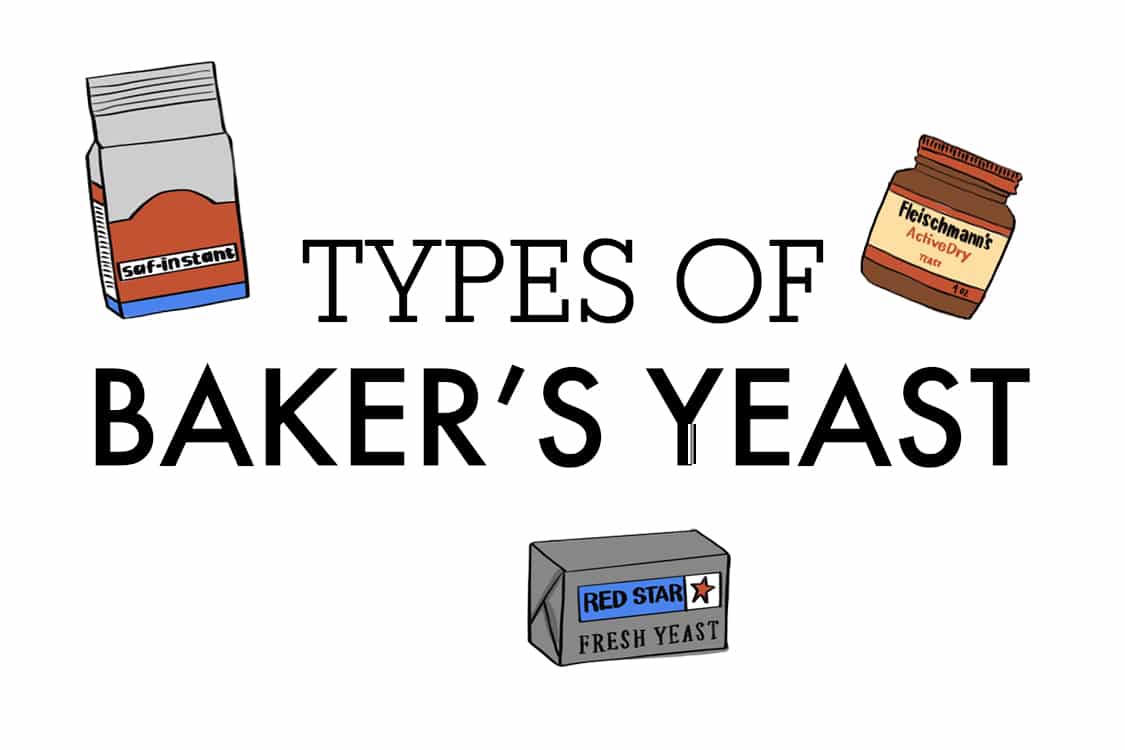
    Illustration showing three packages of baker’s yeast—Saf-Instant, Red Star Fresh Yeast, and Fleischmann’s Active Dry—surrounding the text Types of Baker’s Yeast, highlighting different types of baking yeast.

    WANT TO SAVE THIS RECIPE?

    Enter your email below and we'll send it straight to your inbox. Plus you’ll get great new recipes from us every week!

    Please enable JavaScript in your browser to complete this form.
    Loading

    Table of Contents

    Toggle
    • The Four Main Types of Baking Yeast
    • Active Dry Yeast
    • Instant Yeast
    • Rapid Rise Yeast or Bread Machine Yeast 
    • Fresh Yeast 
    • Converting Yeast Measurements
    • Final Thoughts
    • More Favorites From Longbourn Farm

    The Four Main Types of Baking Yeast

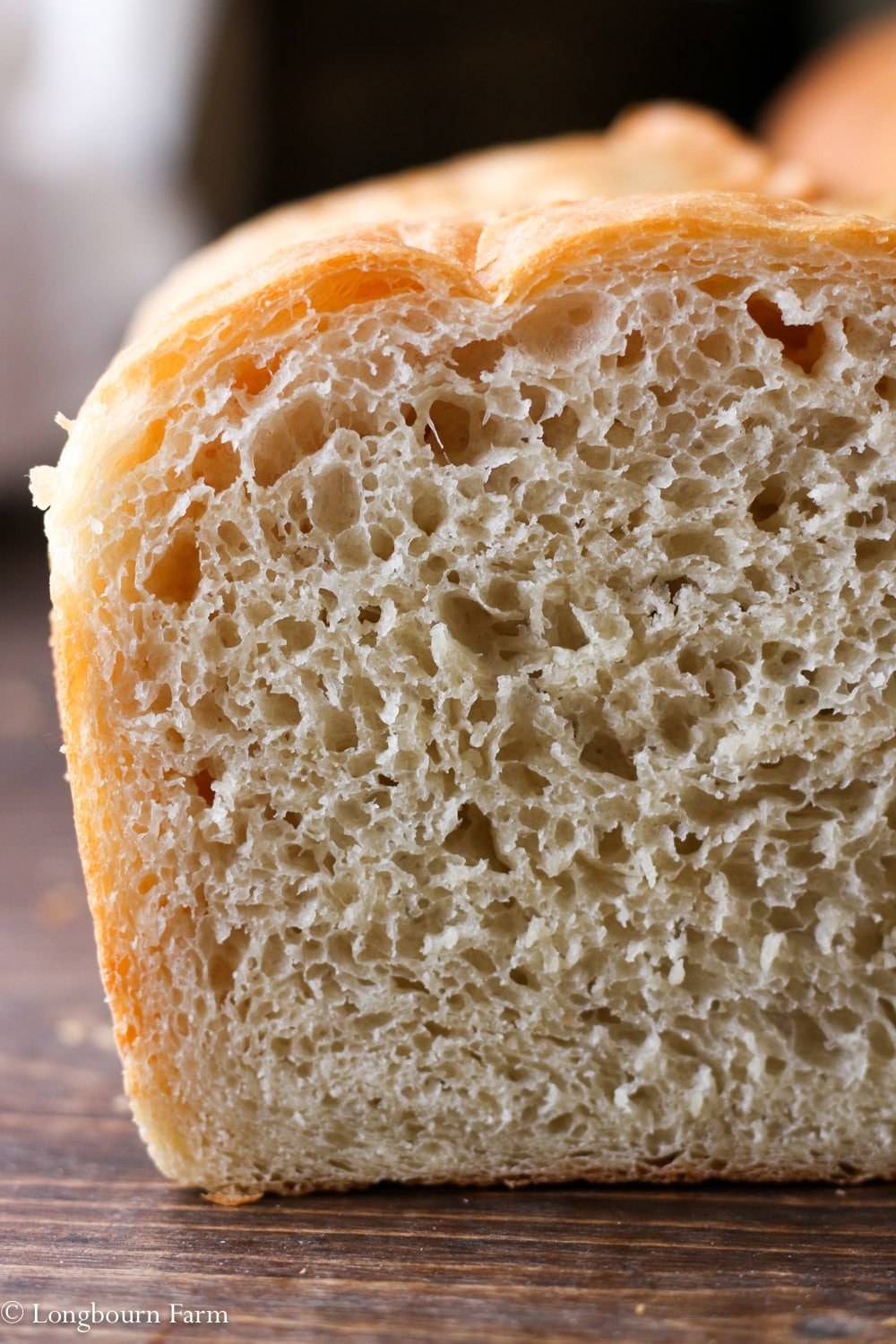
    Close-up of a sliced loaf of homemade white bread, showing a soft and airy texture with a golden brown crust, made using different types of baking yeast, resting on a wooden surface.

    Active Dry Yeast

    This is “normal” yeast. You’ll most likely be familiar with finding this yeast in a strip of foil packets, all held together at the seam. This yeast can be bloomed in water to jump-start activation. It also needs 2 rise steps in a recipe.

    Instant Yeast

    This yeast is specially formulated to activate more quickly. This yeast does not need to be bloomed in water and can tolerate just one rise step in a recipe. It can also be found in little pre-portioned packages.
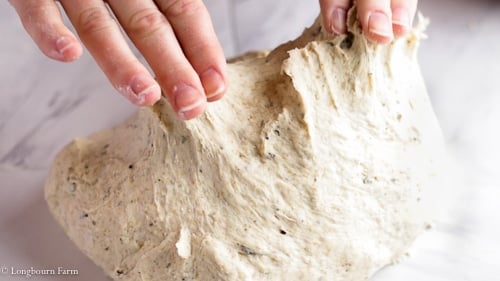
    Close-up of a persons hands stretching a soft, sticky bread dough on a white surface, highlighting how different types of baking yeast help achieve the perfect texture.

    Rapid Rise Yeast or Bread Machine Yeast 

    Both of these yeasts are similar to Instant Yeast. The granules are usually smaller and more round to work better in bread machines. These two different types of yeast can be used interchangeably in recipes.

    Fresh Yeast 

    This is a wet, compressed yeast that is ideal for many baking applications. It is not very common because it is not shelf-stable. It can be used in all recipes that call for dry yeast. You’ll find it sold in the refrigerated section of the grocery store. 
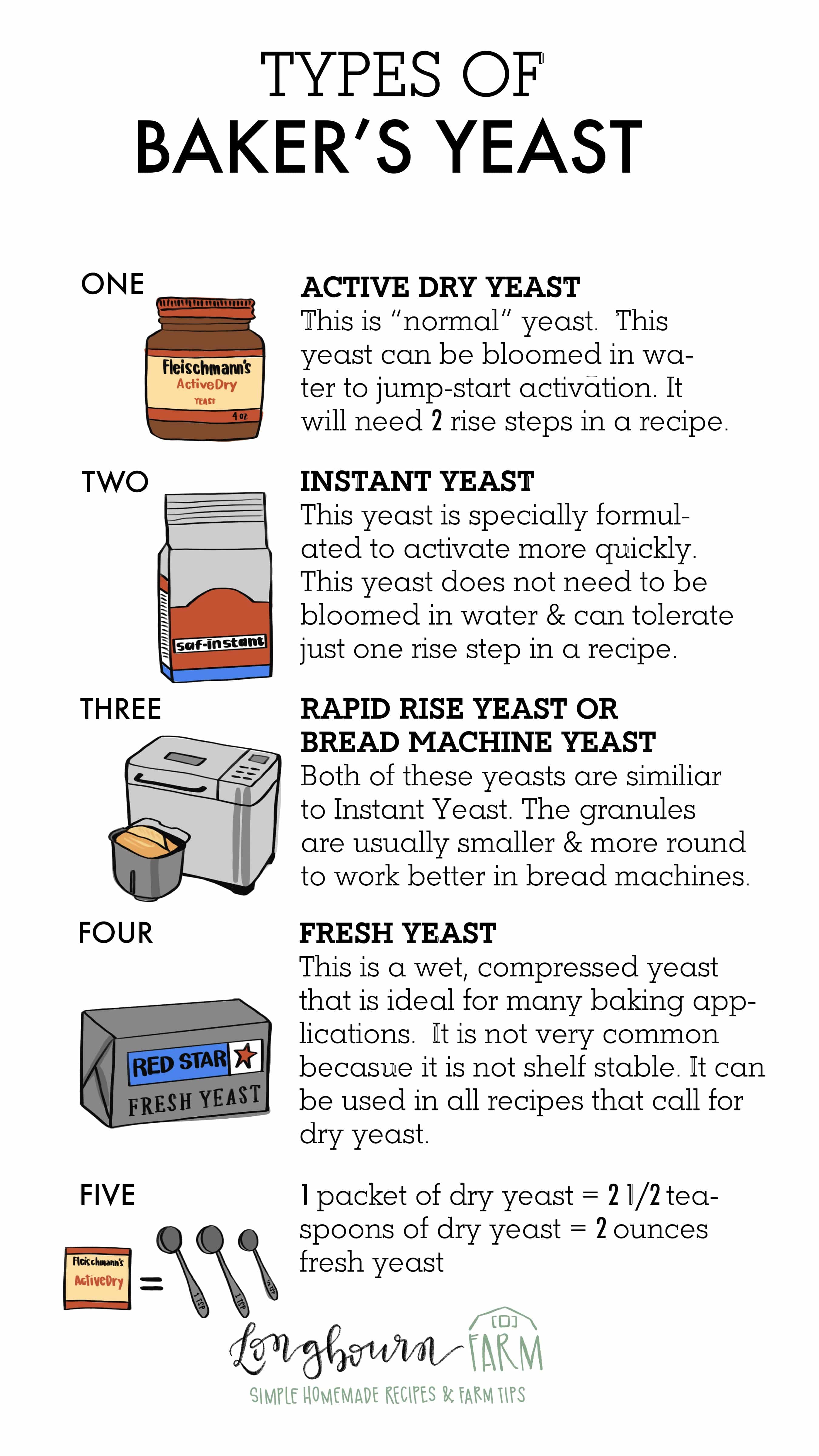
    Infographic explaining five different types of baking yeast—active dry, instant, rapid rise/bread machine, fresh, and yeast packets—with brief descriptions and illustrated jars or packets for each type.

    Converting Yeast Measurements

    With there being so many different types of yeast, the measurements required vary. Recipes requiring yeast often ask for a larger measure of dry yeast than they do fresh yeast. 

    • A single packet of dry yeast is already measured in the most common measurement requested from recipes.
    • 1 packet of dry yeast = 2 ¼ teaspoons of dry yeast = 2 ounces fresh yeast
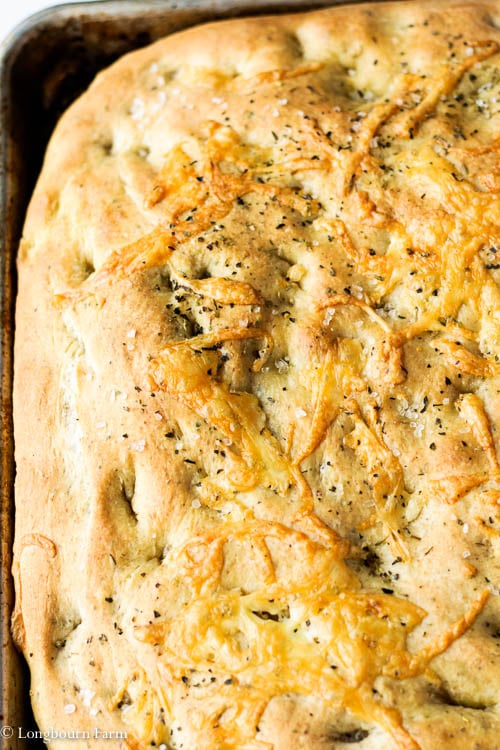
    Golden-brown focaccia bread topped with melted cheese, herbs, and coarse salt, baked in a rectangular metal pan. The rustic, dimpled surface highlights the homemade touch—and can be created using different types of baking yeast.

    Final Thoughts

    Once you understand the unique characteristics of each yeast type, from the reliable active dry yeast to the speedy instant varieties, you will be able to choose the perfect option for any recipe and avoid common baking mishaps.

    Armed with this knowledge and the conversion chart above, you are now ready to tackle any bread recipe with confidence and achieve consistently amazing results every time.

    More Favorites From Longbourn Farm

    • Fluffy Cornmeal Biscuits Recipe
      Fluffy Cornmeal Biscuits Recipe
    • Easy Recipe for Pretzel Rolls
      Easy Recipe for Pretzel Rolls
    • Homemade Buttery Chive Biscuits
      Homemade Buttery Chive Biscuits
    • Fluffy Pumpkin Corn Muffins
      Fluffy Pumpkin Corn Muffins

    Did you find this info helpful? If so, please share it on Instagram, Facebook, or Pinterest!
    FacebookPinterest

    More Essential Kitchen How-To's for Busy Home Cooks

    • A small white dish filled with burger seasoning sits on a table, surrounded by three cheeseburgers, a wooden spoon, scattered seasoning, and a white towel with green stripes.
      Seasoning for Burgers - Homemade Burger Spice Mix
    • A metal colander filled with fresh green beans sits on a white surface next to a blue and white striped cloth for how to blanch green beans.
      How To Blanch Green Beans
    • A mason jar filled with bright red cherry juice sits on a round, woven placemat. The jar is sealed with a silver lid and topped with two cherries. Nearby, a small bunch of cherries is scattered, adding a vibrant touch to this delightful cherry juice recipe scene.
      Homemade Cherry Juice Recipe - Made With A Steam Juicer
    • steak doneness chart image.
      Temperature Guide for Steaks

    Reader Interactions

    Comments

      Leave a Reply Cancel reply

      Your email address will not be published. Required fields are marked *

      Recipe Rating


      This site uses Akismet to reduce spam. Learn how your comment data is processed.

    1. Pam

      June 28, 2020 at 3:50 pm

      How to store the instant yeast? I have read the active yeast should go to the fridge, does it apply the same to instant yeast? Is it better to put it on a glass jar? Thank you.

      Reply
      • Alli

        June 30, 2020 at 10:52 am

        Hi Pam, yes you can store instant yeast in a jar in the fridge. I also freeze mine for long term storage. I usually just store mine in plastic containers, I haven't noticed any issues using plastic vs. glass.

        Reply
    2. Beverly

      April 29, 2020 at 10:06 pm

      If I have instant yeast in a 1 pound pack and my recipe calls for 1 packet of yeast do I use the same measurement as the regular dry yeast? 2 1/4 tsp = 1 packet?

      Reply
      • Alli

        April 30, 2020 at 12:15 am

        Yes, unless you're using fresh yeast the measurements of 1 packet of yeast will equal 2 1/4 teaspoons.

        Reply

    Primary Sidebar

    Welcome!

    Melissa Griffiths and her husband live on a 12-acre hobby farm in southern Utah with their five incredible children, turkeys, chickens, rabbits, puppies, and fledgling cut flower patch.

    She also enjoys home improvement projects, experimenting in the garden, and collecting colorful eggs from her chickens.
    Read More…

    Latest Recipes

    • Three seasoned salmon fillets in air fryer basket await cooking. Small bowls of spices and a plate with marinade residue are set beside the fryer on a marble countertop.
      How to Make Salmon Fillets in the Air Fryer
    • A bowl of easy potato soup topped with crispy bacon pieces, shredded cheese, and fresh parsley. Two spoons and herbs rest nearby on a textured cloth over a wooden surface.
      What to Serve with Potato Soup: 20+ Perfect Pairings
    • A plate of skillet chicken parmesan features breaded chicken topped with tomato sauce and melted cheese over spaghetti. A fork holds a piece of the chicken, garnished with fresh herbs. Another plate and a pan are partially visible nearby.
      Easy Skillet Chicken Parmesan Recipe
    • A slice of golden, flaky homemade chicken pot pie on a dark plate with a fork, next to a pie dish holding the remaining pie. The plate sits on a striped cloth on a wooden table with herbs scattered nearby.
      What to Serve with Chicken Pot Pie: 25+ Delicious Side Dish Ideas

    Latest Farm

    • A hummingbird hovers near a red and yellow feeder with a blurred green background.
      Simple Hummingbird Feeder Tips: Setup & Care Guide
    • small chicken coop with chicken roosting and text saying small chicken coop ideas.
      Small Chicken Coop Ideas
    • what is chicken grit.
      Chicken Grit
    • what is a broody hen image.
      How to Stop Broody Hens

    Footer

    ↑ back to top

    About

    • About Us
    • Privacy Policy
    • Terms & Conditions

    Newsletter

    • Sign Up! for emails and updates

    Contact

    • Contact
    • Press
    • Work With Me
    • FAQ

    FTC Disclosure of Material Connection: The way I provide you with free content is through affiliate links and some of the links in the post above may be affiliate links, they will be marked in the post. Regardless, I only recommend products or services I use personally and believe will add value to YOU. Read terms here.

    Copyright © 2024 longbournfarm.com. All rights reserved.