
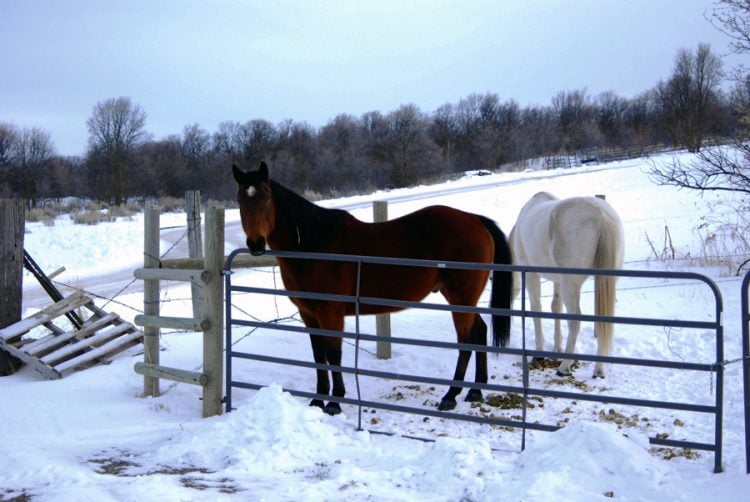
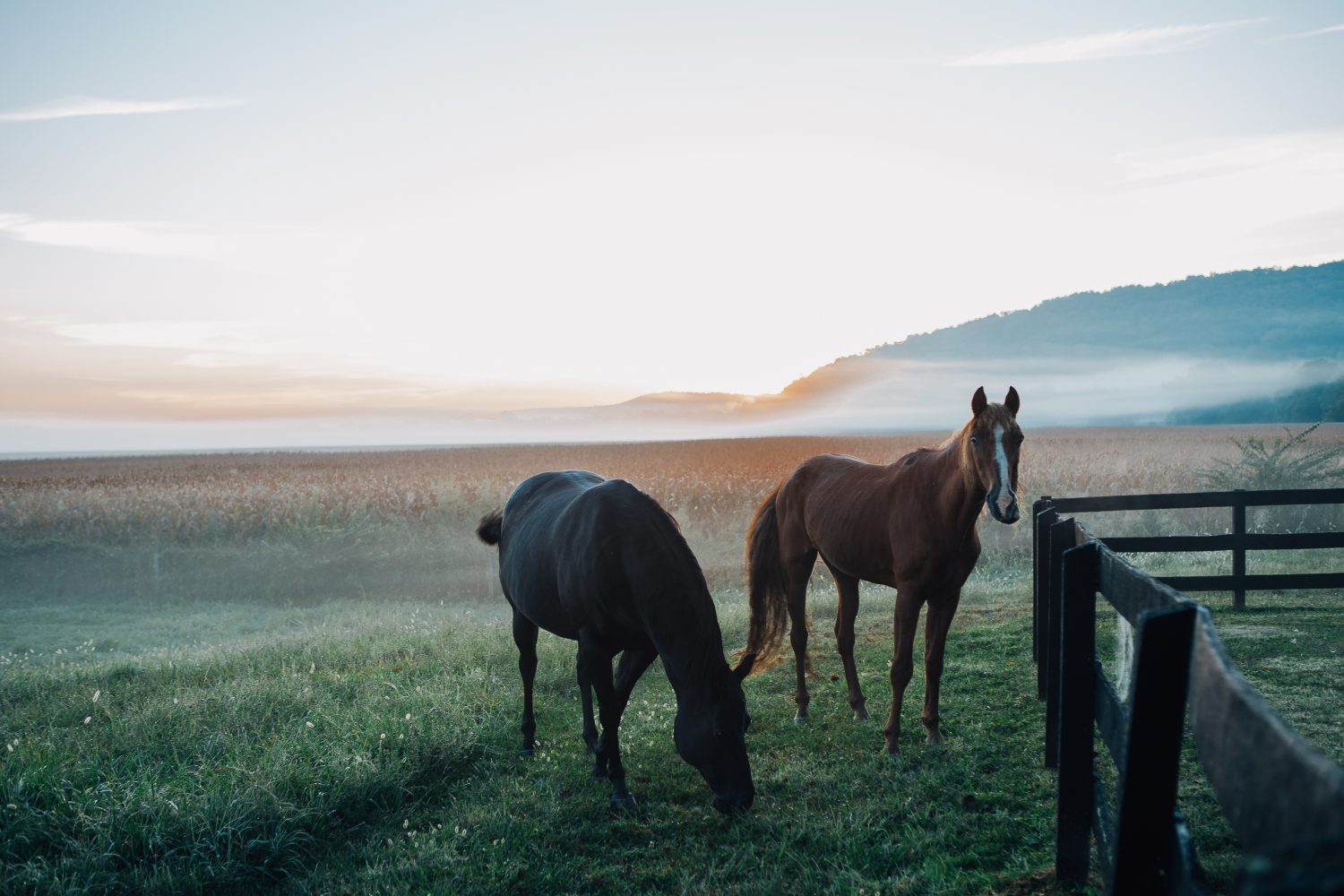
We are going to focus on horses in this article, but the principles apply to any livestock or companion animal. Feed changes for all animals should happen gradually!
WANT TO SAVE THIS RECIPE?
Enter your email below and we'll send it straight to your inbox. Plus you’ll get great new recipes from us every week!
We are going to focus on horses in this article, but the principles apply to any livestock or companion animal. It has long been understood that when switching horses feed the change should happen gradually. But do you know why? Sometimes switching feed can be tedious and tiresome so understanding the science behind why it is important can help you determine if a change can be done more quickly or if a longer process is necessary.
Horses eat mostly forages. A forage is any type of high fiber feed - fresh grasses or legumes and dried grasses or legumes (hay) being the most common. There are other types of forages, but those are the most common for horses. In order to digest a diet composed mainly of forage, a horse needs some help. If their digestive system was like ours, they would be in trouble.
Where we only have a stomach, small and large intestine, a horse additionally has a cecum. That is where all the magic happens. You know that book, "Horton Hears a Who"? Well imagine that tiny village on the flower Horton picked and think of it in your horses cecum. Weird? Nope! There is a village of microbes in your horses cecum and they are the ones that actually digest a lot of the feed for your horse! It is a great symbiotic relationship. The cows rumen works in a similar fashion. They have a few more compartments but the microbe principle is the same.
Now, there isn't just one kind of microbe. There are microbes that like fiber and microbes that like starch and microbes that produce a whole bunch of methane and many more kinds of microbes. There are a ton of different microbes in your horses' cecum! This is important to know because when you feed your horse a certain feed, you are really feeding a certain kind of microbe.
When you feed an all fiber diet of dried grass hay, you favor the fiber-loving microbes and they become the largest population. If you were to switch, all of a sudden, to a diet higher in sugar and starch, like fresh pasture grass, the microbes would be in trouble. You just started to starve the largest population of microbes in your horses' cecum and there are simply not enough of the starch loving microbes to compensate. Basically, you create a major digestive upset because the microbes can't digest the feed - the wrong kind are the biggest population in the cecum! This is why abrupt feed changes can lead to colic.
So, how does a gradual feed change help this situation? Let's talk about the same scenario - you feed your horse grass hay and want to move it to pasture. You let your horse out on pasture for a few hours a day for a few days and then a few more hours a day for a couple more days and within about a week your horse is just eating pasture. Perfect! This works because it gives the starch loving microbes time to grow and become a large enough population to handle the feed. The microbes are smart {my professor always told us they were smarter than us!} and they will automatically adjust their population size based on the available feed - you just need to give them time. For major changes, like a high fiber diet to a higher starch diet, take it slower {7-10 days}. For small diet changes, like grass hay to alfalfa hay, you can take it a little faster {3-5 days}.
A couple of important notes
- If your horse is prone to colic, always make all feed changes very slowly and with frequent monitoring. Sometimes, an appropriate probiotic supplement can help this situation. A probiotic is a supplement of bacteria for your horse to aid in digestion.
- When switching to pasture grass, turn out horses in the afternoon. The grass won't be quite as rich and sugary.
- Grazing in the afternoon also means the grass is drier {no dew} and your horse will produce more saliva. This is good to manage the pH of your horses' cecum and make sure it stays at a healthy level.
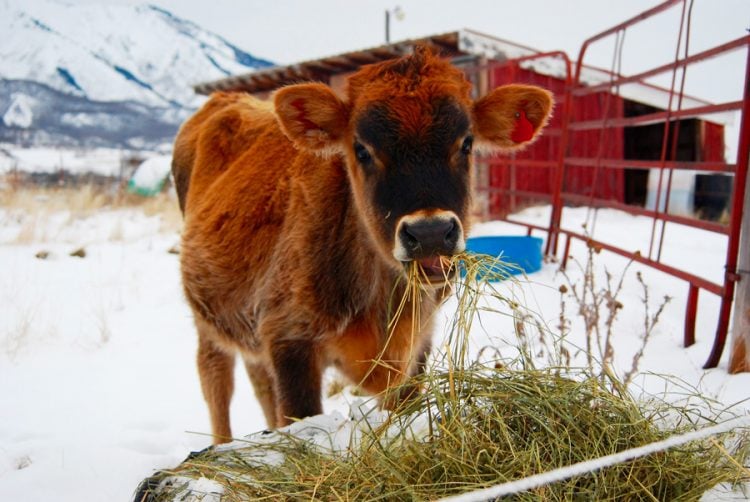
- These principles apply to all ruminating animals as well {goats, cows, sheet, ungulates}. They are better at dealing with changes in diet but it's still important to take it slow.
- Dogs and cats need time to adjust too! Basically, when changing any animals feed, do so gradually!
Pin this farm tip on your Hobby Farming board to SAVE it for later! Follow Longbourn Farm on Pinterest for more great tips, ideas, and tutorials!
[et_bloom_inline optin_id="optin_4"]

Leave a Reply