


Are you looking for a friendly, medium-sized duck to add to your flock? With their striking appearance and uniquely colored eggs, you can't go wrong with a Cayuga duck! Learn more about these beautiful birds and how to care for them in this comprehensive guide.
WANT TO SAVE THIS RECIPE?
Enter your email below and we'll send it straight to your inbox. Plus you’ll get great new recipes from us every week!
Lets talk Duck: Cayuga
I'm no stranger to raising birds, and I've encountered my fair share of duck breeds. They lay bigger eggs than chickens, are generally less noisy, and require minimal maintenance. But when I first came across a Cayuga duck, I was immediately drawn to their iridescent black feathers and curious personality.
Cayuga ducks are the perfect domesticated bird for those looking to add some diversity to their flock! You'd be surprised at how much you can learn from these stunning birds, and I'm here to share all my knowledge with you. Keep reading to discover everything you need to know about Cayuga ducks - including their origin, temperament, and my first-hand tips on raising them.
Cayuga Duck History
The history of the Cayuga duck are a little murky, but we can trace their roots back to the 19th century in New York. It's believed they were bred from wild black ducks, although there are conflicting theories about their exact lineage. Regardless of their ancestry, these ducks were named after Lake Cayuga (which is named after the native Cayuga People) in the Finger Lakes region. They’re documented to have been brought to New York around 1840 and were recognized by the American Poultry Association (APA) in 1874.
At one point, Cayuga ducks were highly popular and raised commercially for their meat. But that all changed when the Pekin duck took the lead in the meat industry. Even though they aren't the most popular meat ducks in the US anymore, Cayuga ducks are still raised for their meat and egg-laying capabilities. They’re considered a dual-purpose breed and are suitable for both purposes!
In 2008, the Cayuga duck was added to the Livestock Conservancy's Conservation Priority List as a threatened species. But as of 2020, they've been removed from the list and are now listed as 'watch'.
Characteristics of Cayuga Ducks
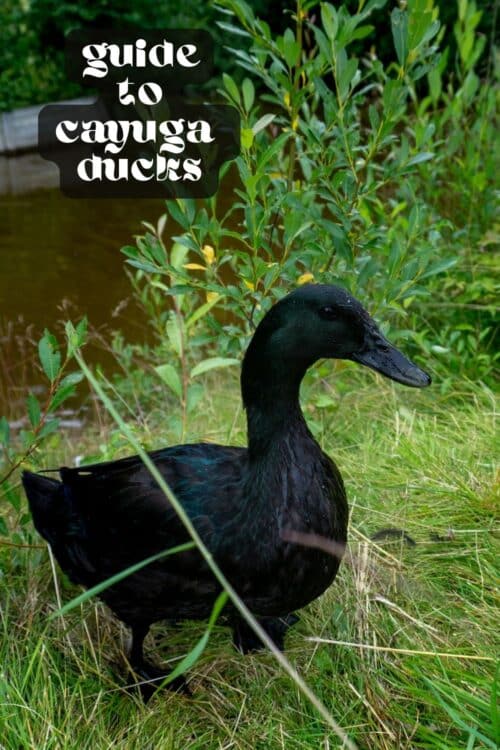
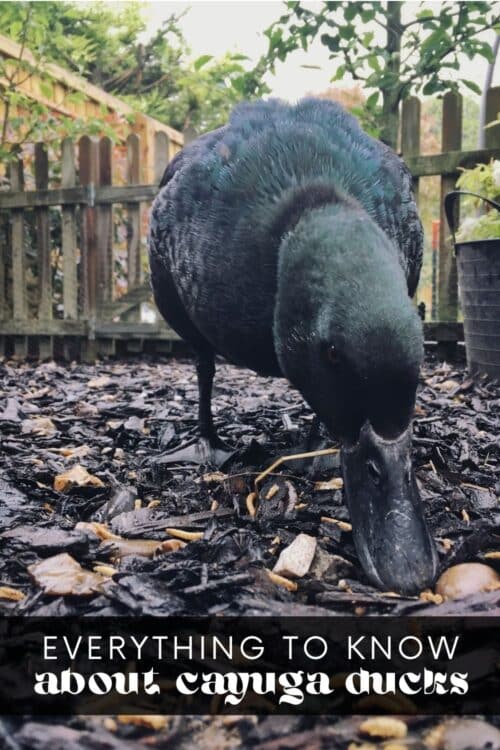
One of my favorite things about Cayuga ducks is their stunning appearance! You'll see them with black feathers that have a colorful sheen when the light hits them just right. Here are some other defining characteristics of Cayuga ducks:
- Average weight: 6-8 pounds for males, 5-7 pounds for females
- Black feathers with an iridescent sheen - mostly green, but can also appear blue and purple
- Black beak and feet, which may sometimes have an orange tinge in older ducks
One interesting fact about the duck Cayuga is their color can change with age. Female ducks can develop patches of white feathers over time. I've noticed it's usually the ducks with the most iridescent feathers that develop these white patches quickest. Even though it's their natural aging process, I still think it adds to their unique appearance!
Cayuga Duck Temperament
Cayuga ducks are calm, docile, and friendly birds. They’re great foragers and make wonderful pets, especially when raised by hand. Don't be surprised if your Cayuga ducks follow you around and enjoy human interaction - they're known for their sociable nature!
One thing to note is that Cayuga ducks are very hardy. They do well in both hot and cold climates, making them a great choice for different regions. Females are also known for their broodiness and are attentive mothers.
Cayuga Duck Care
Believe it or not, Cayuga ducks don't need a pond to thrive. As long as they have access to clean water (like in a large bowl or trough), they'll be just fine. However, if you do have a pond or body of water on your property, your Cayuga ducks will definitely enjoy it! One thing they do need is a shelter. Somewhere they can rest and shelter from extreme weather conditions. This can be a simple shelter made from wood or even a chicken coop.
When it comes to feeding, Cayuga ducks aren't picky eaters. They'll happily consume a mix of commercial feed, insects, and fresh greens. If they're left to free-roam or forage, they'll find a lot of their own food as well.
About Cayuga Ducks Eggs
The Cayuga duck is a decent layer, averaging around 100-150 eggs per year. They'll stop laying during the colder months but will start again as soon as spring arrives and the daylight hours increase. Like many other duck breeds, Cayuga ducks go through molting which can also affect their egg production. When you do find eggs, use them in your baking for the best-tasting goods!
The uniqueness of Cayuga Duck Eggs
Cayuga ducks eggs are large, averaging 70-90 grams (2.47-3.17oz) in weight! But what's truly unique about them is their shell color. The Cayuga duck egg actually changes color throughout the laying season. They usually start with a dark black shell and gradually become lighter as the season progresses. It isn't uncommon to get black, then gray, or olive-toned eggs until they eventually turn completely white.
Cayuga Duck Egg incubation period
As previously mentioned, Cayuga ducks are known for their broody nature. This means they love to sit and hatch eggs. The incubation period for Cayuga duck eggs is around 28 days, whether naturally incubated or artificially.
Cayuga Duck Lifespan
Cayuga ducks can live quite a long life. You must consider this when deciding if they’re the right breed for you. In ideal conditions, Cayuga ducks can live for 8-12 years, but the average lifespan is around 10 years. Taking good care of your ducks, and providing them with proper nutrition and shelter can help increase their lifespan.
Cayuga Duck Eggs FAQs
On paper, Cayuga ducks are classified as a ‘heavy’ duck breed. This can lead to the assumption that they cannot fly very well. However, in reality, Cayuga ducks can fly short distances if needed, but they’re not known for their flying abilities. I suggest clipping at least one wing to prevent them from flying too high and possibly escaping.
I've found that Cayuga ducks start laying eggs at around 5-7 months of age. Sometimes they can start a little later depending on the individual duck and their living conditions.



Liz
Just curious,are the native to the Texas Coast?
There's one at a park that we frequent and she follows me around. My teenagers joke that we should take her home but I assumed she's wild, reading your post about them being heavy and not distance flyers, I wonder if she was dumped.
Treenal Sharp
Hey I was hatching my Cayuga eggs with my daughter and she loves them already! they are really cute and cuddly and I love them as much as she does.